

Tank Welding machine
HAOYU provides automatic tank welding machines for manufacturing water storage tanks, water heater tanks, air receiver tanks stainless steel vessels and tanks for other purposes. Our range covers circumferential seams, tank end-cap joints, nozzle connections and selected applications requiring both circular and straight seam welding. Explore the models below to find a tank welding machine suited to your workpiece and production requirements.
Features of Tank Welding machine
Automated Welding Control
Each automatic tank welding machine coordinates welding parameters and workpiece movement to support consistent, repeatable welding cycles in batch production.
Customized Fixtures for Different Tanks
Our tank welding equipment can be configured with fixtures and supports matched to the tank diameter, length, joint position and loading requirements.
Application-Specific Welding Processes
HAOYU offers tank welding machine configurations using TIG, MIG/MAG or submerged arc welding, with the process selected according to the material, wall thickness and joint design.
Dedicated Solutions for Different Welds
From an automatic tank girth welding machine for circumferential joints to dedicated nozzle welding equipment, HAOYU provides configurations suited to different tank manufacturing tasks.
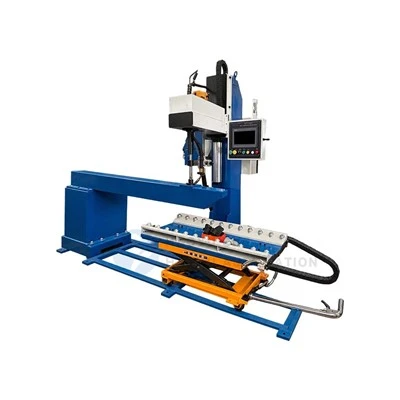


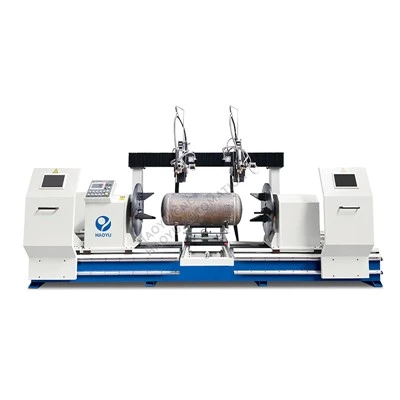


All types of automatic tank welding machine
Automatic Tank Welding Equipment for Different Joints
Choosing tank welding equipment starts with identifying the joint to be welded. A shell-to-end-cap connection requires a different positioning arrangement from a nozzle joint, while a tank body with both longitudinal and circumferential seams may require separate stations or an integrated system.
HAOYU offers dedicated equipment for these different tasks. Depending on the model, the machine rotates the workpiece beneath a positioned welding torch or guides the torch around a fixed component. Fixtures, workpiece supports and welding parameters are selected according to the tank structure.
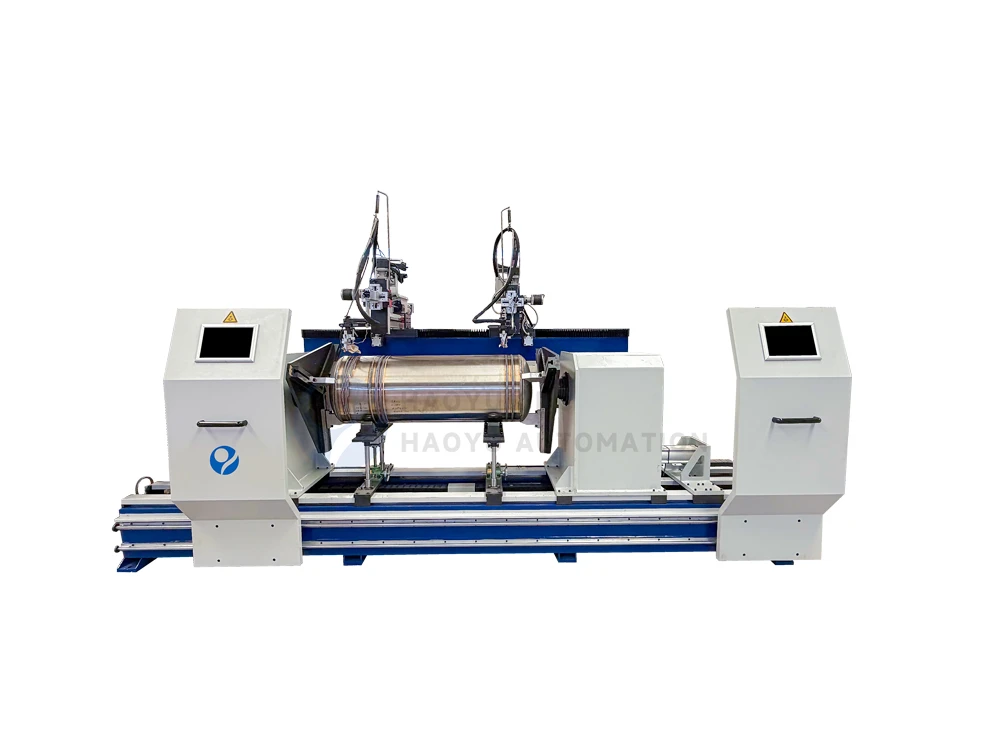
Double-Ring Welding for Tanks
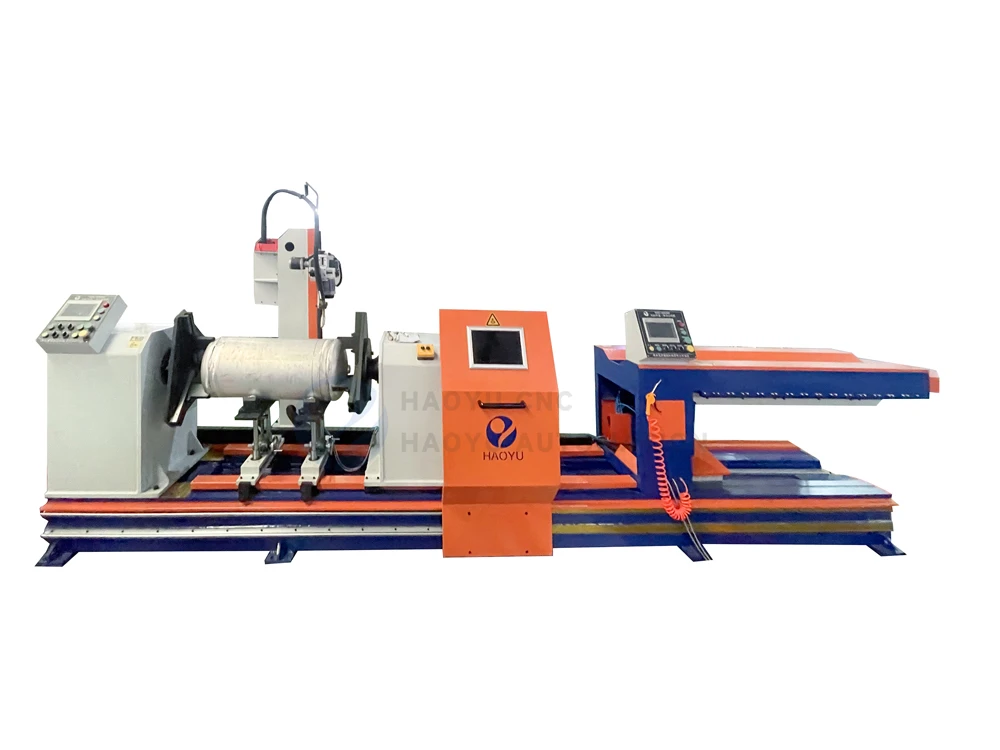
For cylindrical storage tanks with end caps at both ends, a specialized double-ring welding machine can be used to weld two annular joints.
HAOYU's double-ring welding machine for tanks features a horizontal structure, allowing the workpiece to rotate and the welding torch position to be adjustable. Its clamping and support devices are designed around the tank body and end cap assembly.
Vertical Girth Welding Machine for Tanks
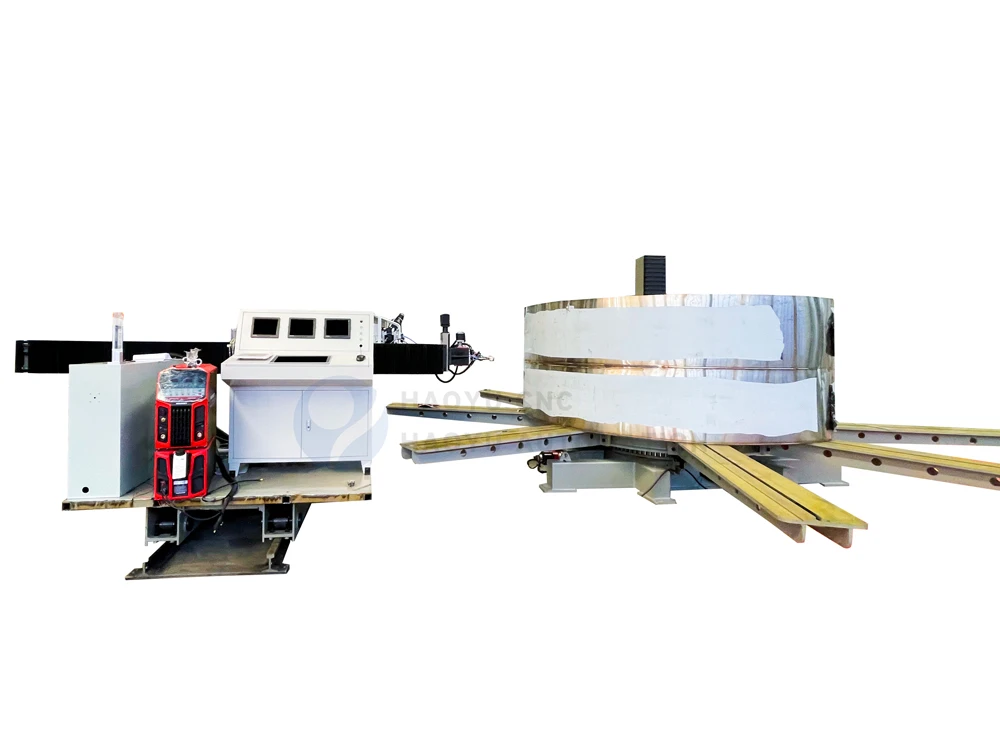
This tank circumferential welding machine is specifically designed for circumferential welding of tanks and cylindrical shells. Controlled workpiece rotation helps maintain a stable welding speed along the joint direction during the welding process. This welding equipment is primarily designed for larger tanks. Our vertical circumferential welding machine can be customized to suit the tank size, wall thickness, and joint design.
Nozzle Welding Machine for Tanks
A tank welding machine may be required for nozzle connections as well as tank body seams. These smaller joints need tooling that positions the connection accurately and provides access for the welding torch.
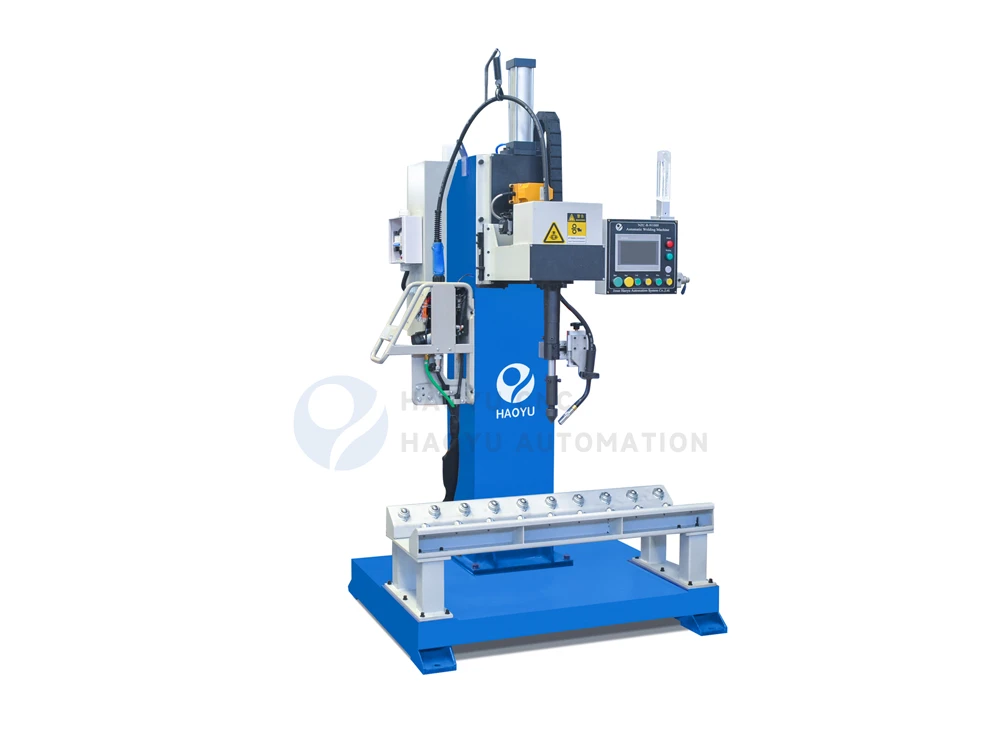
Our CNC MAG nozzle welding equipment provides a dedicated option for tank welding, using a vertical layout and a controlled welding cycle.
Integrated Circular and Straight Seam Welding
Some production requirements involve both circular and straight welds. HAOYU’s integrated circumferential and straight seam welding machine combines these functions within one system.
This option can be evaluated when the workpiece range and production sequence justify shared equipment. Fixture changes, torch access and the required output should be considered before selecting an integrated configuration.
How to Choose a Tank Welding Machine
The right automatic tank welding machine should match your actual parts and production sequence. Before selecting a model, consider the following:
- Material and wall thickness: Identify the material grade and thickness range for each tank model.
- Workpiece dimensions: Provide the minimum and maximum diameter, length and weight.
- Joint details: Mark the weld locations and specify the joint preparation, fit-up and required access.
- Production target: State the required output, batch sizes and frequency of model changes.
- Loading and handling: Explain how operators will load, support and unload the tank.
- Inspection requirements: Include the required weld acceptance criteria and subsequent inspection or testing.
TIG, MIG/MAG and submerged arc welding are available across relevant HAOYU models. The appropriate process and machine configuration depend on the application; these processes are not interchangeable options on every machine.
How to Use a Tank Welding Machine
1. Check the Equipment
Before operation, check the fixtures, torch, cables and work return connection. Confirm that the required gas supply, cooling system and protective devices are ready according to the machine manual.
2. Position the Workpiece
Clean the joint area and secure the tank in the designated fixture. Align the end cap, nozzle or nut with the required weld position, and check clearance for the programmed movement.
3. Set the Welding Parameters
Select the program and settings specified for the material, wall thickness and joint design. Adjust torch position, travel or rotation speed, and wire feeding where applicable.
4. Verify the Setup
Perform the prescribed positioning check or dry run before welding. For a new workpiece or changed setup, verify the settings on a trial part before starting batch production.
5. Run and Inspect
Start the automatic welding cycle and monitor operation from the designated operator position. After the cycle stops, unload the workpiece as instructed and inspect the weld against the specified acceptance requirements.
How to Maintain Tank Welding Equipment
Before maintenance, isolate electrical power and other energy sources according to the equipment manual. Release stored pressure and allow hot components to cool where required.
1. Clean Fixtures and Working Surfaces
Remove spatter and debris from locating surfaces, supports and accessible moving areas. Clean fixtures help maintain accurate workpiece positioning.
2. Inspect the Torch and Consumables
Check process-specific consumables, including contact tips, nozzles, liners or tungsten electrodes. Clean or replace worn parts according to their condition and the torch manual.
3. Check Cables, Hoses and Connections
Inspect welding cables, return connections and gas or coolant hoses for damage, looseness or leakage. Have faults corrected before returning the machine to service.
4. Service Moving and Auxiliary Systems
Lubricate specified points using the recommended lubricant and interval. Check the wire feeder, cooling system and pneumatic components where fitted.
5. Keep Maintenance Records
Record inspections, replacement parts and recurring alarms. Follow the maintenance schedule for the complete tank welding machine and its welding power source, with electrical servicing performed by qualified personnel.
Once the equipment has been successfully accepted and shipped to the customer's factory, we will provide operating instructions and maintenance manuals to help the customer learn how to install and maintain the equipment.
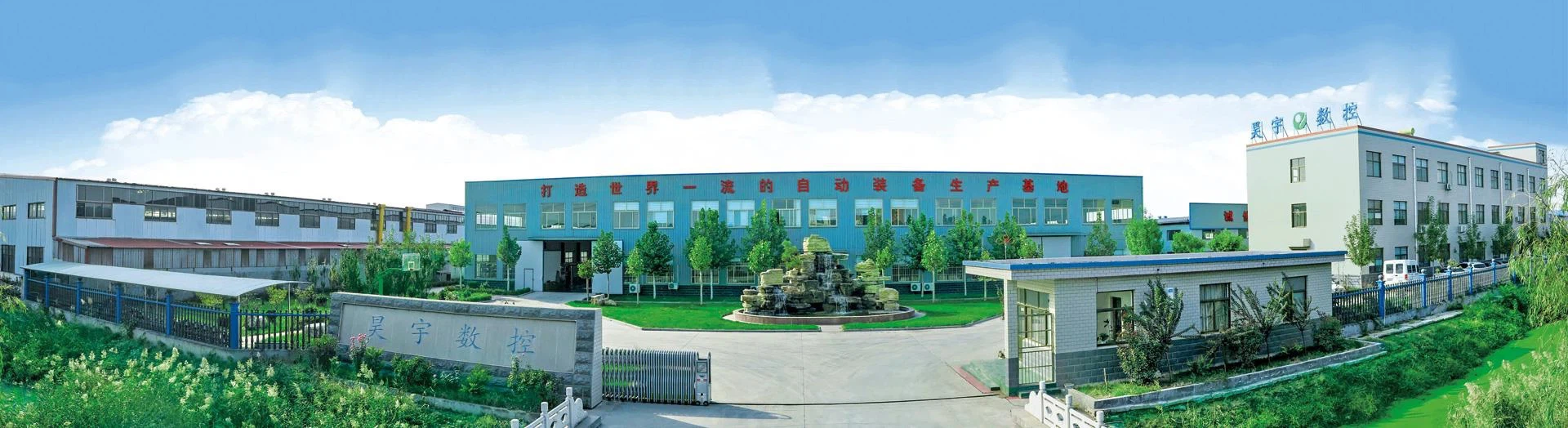
HAOYU Tank Welding Machine Manufacturer
As a tank welding machine manufacturer, HAOYU develops equipment configurations around the workpiece and the welding task. Our range includes dedicated tank welding stations, circular seam systems, nozzle welding equipment and integrated welding machines.
Customization begins with your drawings or samples. We evaluate the joint location, positioning method, fixture requirements and production target to identify a suitable arrangement. For manufacturers producing several tank sizes, the working range and changeover requirements should be defined at the beginning of the project.
Frequently Asked Questions

01.What is a tank welding machine used for?
02.What types of tanks can your equipment weld?
03.Can the equipment weld nozzles and nuts?
04.Can one machine perform both tank circumferential welding and nozzle welding?
05.What materials can your tank welding equipment handle?
06.Can one machine accommodate different tank sizes?
07.How does a horizontal tank circumferential welding machine work?
08.Is loading and unloading fully automatic?
09.How is weld quality verified?
10.What information is needed for a quotation?
We're one of the leading automaitc tank welding machine manufacturers and suppliers in China. Welcome to buy high quality automaitc tank welding machine for sale here and check the price with our factory.