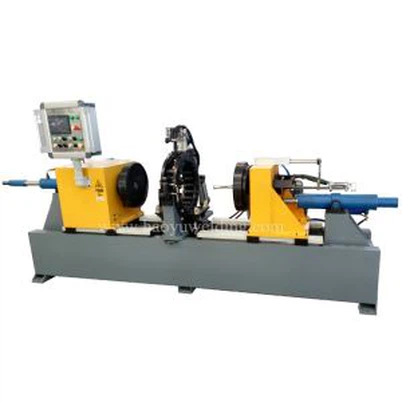



Automatic Circular Seam Welding for Cylindrical Tanks
Need to weld the circular joint between a tank shell and an end cap? HAOYU offers customized tank circumferential welding equipment based on your workpiece dimensions, joint design and production requirements.
Description
Automatic Circular Seam Welding for Cylindrical Tanks Overview
The Circular Seam Welding Machines are designed for automated circumferential welding of cylindrical tank workpieces. Primarily used for circumferential welding of tank bodies and two end caps, Haoyu Welding can provide customized circular seam welding equipment based on different workpiece sizes, welding processes, and production requirements.This equipment plays a vital role for manufacturers of cylindrical workpieces.
Can This Machine Weld Your Tank?
A circumferential seam runs around the tank body. Typical applications involve joining an end cap to a cylindrical shell or joining cylindrical sections.
To assess suitability, we need to understand both the joint and the complete assembly. Two tanks with the same diameter may require different fixtures because their end shapes, weight, fittings or seam locations differ.
Key questions include:
- What are the tank diameter, overall length and assembly weight?
- What material and wall thickness are being welded?
- Is the joint a butt joint, lap joint or another design?
- Does the tank have one circular seam or joints at both ends?
- Could nozzles, brackets or other fittings interfere with rotation or torch access?
- How much do part dimensions and fit-up vary during production?
This equipment is intended for circular joints. If your tank also requires a longitudinal shell weld, identify that operation separately when requesting a proposal.
How the Tank Is Positioned and Welded?
In a rotating-workpiece arrangement, the tank turns while the welding torch stays at the selected working position. The fixture and supports must keep the assembly stable without obstructing the seam.
Before welding, the operator loads the prepared assembly, secures it and checks the joint position. The torch is then aligned with the weld, and the welding cycle runs using settings established for the application.
After the cycle, the assembly is unloaded and inspected according to the production requirements.
The exact sequence depends on the supplied configuration. Automatic welding does not necessarily include automatic loading, part alignment or unloading, so these operations should be defined in the equipment scope.
Why Fixture Design Matters?
The fixture connects the machine to your actual product. Its design must account for how the tank is located, clamped, supported and released.
For example, a fitting near an end cap may restrict where the tank can be clamped. A longer assembly may need additional support during rotation. A product family with several end-cap shapes may require fixture changes rather than a simple size adjustment.
Provide drawings of the complete assembly, including external fittings, so these requirements can be considered before the equipment is specified.
Welding One Seam or Both Tank Ends
If your tank has a circumferential joint at each end, clarify how you want those joints processed.
Do you need both seams welded during one setup? Must they be welded simultaneously, or is sequential welding acceptable? Will the tank need to be repositioned between operations?
These requirements affect torch quantity, positioning, welding power sources and the operating sequence. Do not assume that every circular seam welding machine includes a dual-torch arrangement.
State your required workflow when requesting a quotation so the proposed configuration can be evaluated against it.
Selecting the Welding Process
MIG/MAG, TIG and submerged arc welding may be considered for different tank applications, subject to configuration review. They are process choices rather than a promise that one machine includes all three.
The selection should account for material grade, thickness, joint preparation, required weld profile and inspection criteria. If you already use an established welding procedure, include it with your inquiry.
For pressure-retaining tanks, also identify the applicable fabrication and testing requirements. A machine demonstration alone does not establish that the finished tank meets those requirements.
Optional Welding Process:
SAW tank circular seam welding machine
Welding Equipment For The Production Of Air Storage Tank
The Automatic Circular Seam Welding for Cylindrical Tanks Working Process
Our circular seam welding machines typically employ a workpiece rotation and a fixed welding torch to complete the entire welding process.
The typical welding process includes the following steps:
1. Workpiece Positioning
The tank or cylindrical workpiece is precisely positioned and held in place by a custom-made fixture. Proper alignment helps maintain consistency in welding gaps and joint positions.
2. Workpiece Rotation
Press the start button on the touchscreen. Controlled by the PLC system, the workpiece will rotate around its central axis at a preset speed. The rotation speed can be adjusted according to the workpiece diameter, material, welding process, and required welding parameters.
3. Welding Torch Alignment
The welding torch is positioned at the circumferential joint. The torch angle and welding position are adjusted according to the joint configuration and workpiece requirements.
4. Automatic Circumferential Welding
As the workpiece rotates, the welding torch maintains a stable position and continuously deposits weld metal along the circular joint. Welding current, voltage, wire feeding speed, and rotation speed can be controlled to achieve consistent weld quality.
5. Continuous Weld Completion
The machine completes one or more rotations until the entire circular seam is welded. For applications requiring higher deposition rates or specific weld profiles, multi-pass or multi-torch welding configurations can also be used.
6.Complete the circumferential weld and manually unload the parts
Watch this vedio help you undersatnd better the circular seam welding process:


What Determines Production Output?
The useful production figure is completed tanks per shift, with handling and changeovers included.
Welding time is only part of the cycle. Loading, clamping, checking fit-up, repositioning, unloading and inspection can all affect actual output. The number of seams and welding passes also matters.
When discussing capacity, provide:
- Required finished tanks per shift
- Number and length of seams per tank
- Existing welding procedure or expected number of passes
- Loading and unloading method
- Product mix and frequency of size changes
Ask for any proposed cycle time to identify its workpiece and operating assumptions. A result demonstrated on one tank should not be treated as the output for every product.
FAQ
1.Can the equipment handle different tank sizes?
This depends on the confirmed working envelope, support arrangement and fixtures. Send drawings of the smallest and largest assemblies, including their weight and fittings. Also identify any differences in joint or end-cap design.
2.Can it weld carbon steel and stainless steel tanks?
Material compatibility must be confirmed for the selected process, welding power source, consumables and joint requirements. Include the exact material grade rather than specifying only "steel."
3.Do both end caps need to be welded at the same time?
Yes, the specific welding method will be customized based on the customer's requirements and the specifications of the workpiece.
4.What types of tanks can be welded with a circular seam welding machine?
Our circular seam welding machines are mainly designed for welding standard-size cylindrical tanks and similar round workpieces. They can be used for applications such as tanks, drums, cylinders, vessels, and other cylindrical components with circumferential joints.
5. What materials can a circular seam welding machine weld?
The machine can be configured for different materials, including carbon steel, stainless steel, and other commonly used metal materials. The welding process and parameters are selected according to the material, thickness, joint design, and production requirements.
6.What welding processes can be used?
Depending on the application, the machine can be configured for welding processes such as MIG/MAG , TIG or SAW welding. The suitable process depends on the tank material, thickness, joint requirements, and desired production efficiency.
7. What tank diameter can the machine weld?
The applicable tank diameter depends on the specific machine configuration and workpiece requirements. Our standard circular seam welding machines are mainly intended for normal-size cylindrical tanks and components. We can also customize the machine according to the customer's workpiece dimensions.
8. Can the machine be used for batch production?
Yes. Automatic circular seam welding is suitable for batch production of cylindrical workpieces. Once the welding parameters and workpiece positioning are set, the machine can repeat the welding cycle with consistent movement and welding conditions.
9.Can you test our tank before we purchase the machine?
Yes. Customers can provide workpiece samples, drawings, or welding requirements for evaluation. Where applicable, we can conduct welding tests to help determine the appropriate welding process, parameters, and machine configuration.
10.How much does a tank circular seam welding machine cost?
The quotation depends on the agreed scope: workpiece capacity, fixtures, welding process, torch arrangement, controls and handling requirements. A drawing-based inquiry helps establish what is included and makes quotations easier to compare.
Hot Tags: Automatic Circular Seam Welding for Cylindrical Tanks, China, manufacturers, suppliers, factory
Send Inquiry
You Might Also Like