
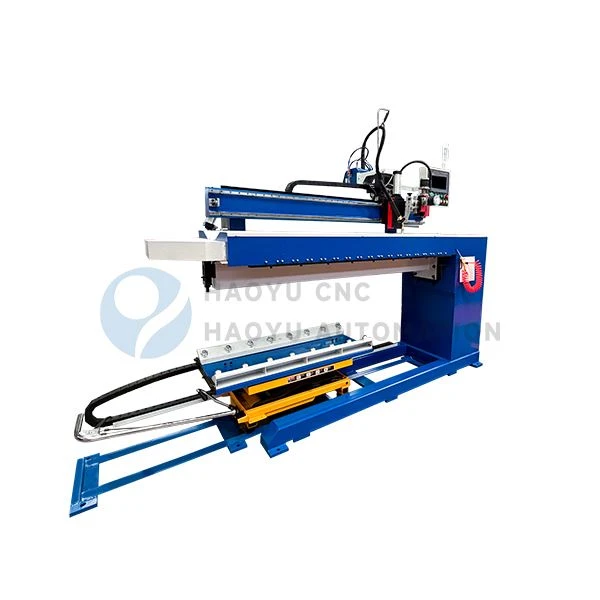
Gas Tank Shell Longitudinal Seam Welding Machine
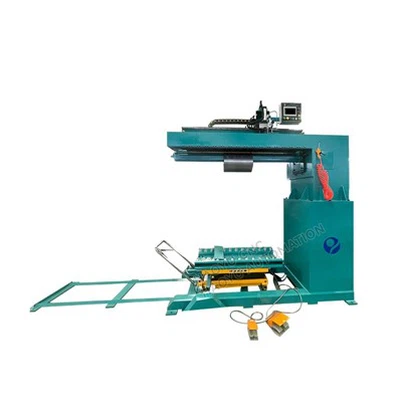
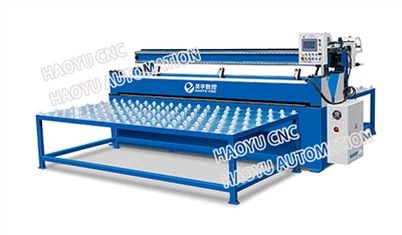
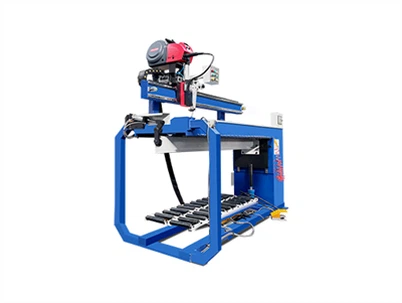
Gas tank shell longitudinal seam welding machine for automatic welding of rolled cylindrical tank bodies. Custom fixture, seam positioning and welding travel system according to tank dimensions.
Description
Gas Tank Shell Longitudinal Seam Welding Machine
The Gas Tank Shell Longitudinal Seam Welding Machine is developed for manufacturers that need to weld the axial joint formed after a metal plate is rolled into a cylindrical gas tank body.
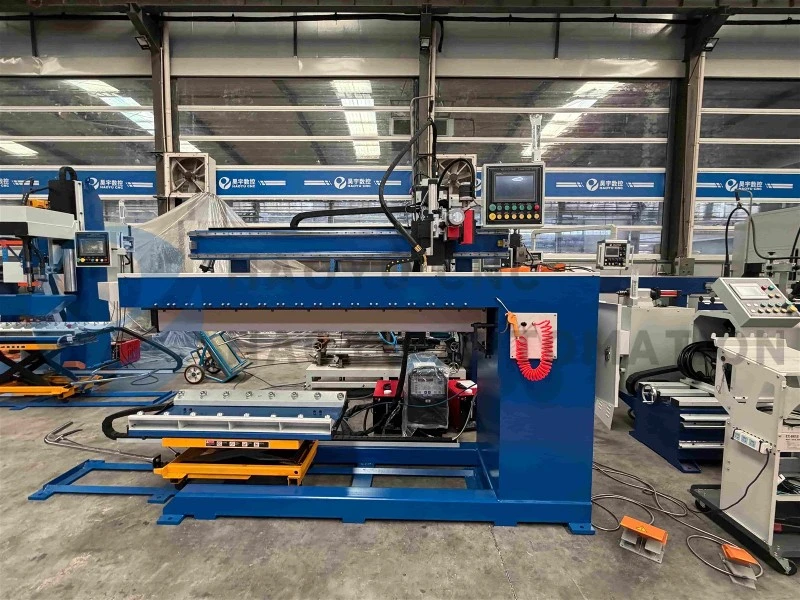
Instead of manually guiding the welding torch along a long joint, the machine provides controlled torch travel along the tank shell seam while the workpiece remains positioned on the welding station.
The system is built according to the actual gas tank specification, especially the shell diameter, shell length, wall thickness, joint design and required welding process.
It is suitable for manufacturers looking to introduce a more repeatable welding process into gas tank shell production.
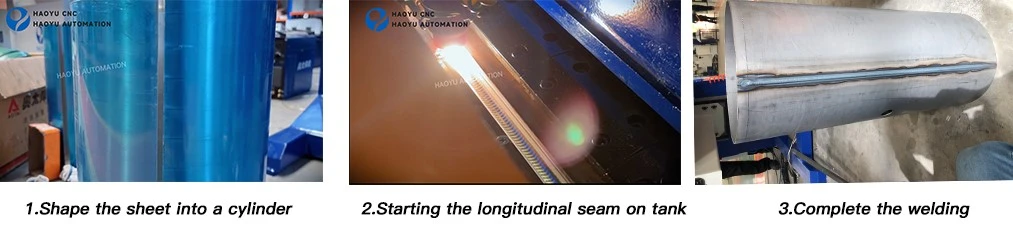
YouTube Welding Video
Watch the automatic longitudinal seam welding process for a cylindrical gas tank shell. The video shows workpiece positioning, welding torch travel and the actual welding operation.
Where This Machine Fits in Gas Tank Production
This machine is intended for the shell welding stage of gas tank manufacturing.
A typical production sequence may include:
Metal Sheet → Rolling → Shell Positioning → Longitudinal Seam Welding → Further Tank Forming / Assembly
After the sheet has been rolled, an open joint remains along the length of the cylindrical shell.
The welding station is used to position this joint and complete the longitudinal weld before the tank moves to subsequent manufacturing processes.
This means the machine is specifically focused on the tank body seam, rather than circumferential welding of tank ends, reinforcement rings, ports or other attachments.
Designed Around the Gas Tank Shell
Gas tank dimensions can vary considerably between manufacturers.
For this reason, the machine is not simply selected according to welding current. The complete welding station needs to match the geometry of the customer's tank body.
Important workpiece information includes:
Tank Diameter
The workpiece support and welding position are determined according to the cylindrical shell diameter.
Tank Length
The effective welding travel is selected according to the maximum longitudinal seam length.
Shell Thickness
Material thickness affects the required welding process, joint preparation and welding parameters.
Joint Condition
The actual butt joint, seam gap and edge preparation should be confirmed before final machine configuration.
Tank Material
The welding system is selected according to the customer's actual tank material and welding procedure.
What Problems Does It Solve in Gas Tank Manufacturing?
- Long Manual Welds
Gas tank shells may require a relatively long axial weld. Maintaining the same hand movement throughout the complete seam can be difficult for manual operators.
The automated travel mechanism provides a defined welding path.
- Variation Between Operators
Different welders may use slightly different travel speeds and torch positions.
An automated welding movement reduces this variation.
- Repetitive Batch Production
When multiple tanks with the same specification are manufactured, repeating the same manual welding operation increases operator workload.
The machine allows the same welding movement to be reproduced for subsequent workpieces.
- Different Tank Specifications
A fixed standard fixture may not fit every gas tank.
The welding station can therefore be designed according to the customer's actual shell diameter, length and joint configuration.
Workpiece parameters for gas tank welding
The following parameters are those of our customers. Non-standard equipment is customized according to customer requirements.
| Diameters | 300-750mm |
| Length | MAX 1500mm |
| Thickness | 3-10mm |
| Material | Carbon steel |
| Welding method | MAG |
| Driver motor | Servo motor 0.75KW |
| Control system | Omron PLC |
Machine Details Can Be Customized
Depending on the project, the gas tank welding station can be designed around different production requirements, including:
- Welding Travel Length
Configured according to the maximum tank shell length.
- Workpiece Support Height
Matched to the tank diameter and welding position.
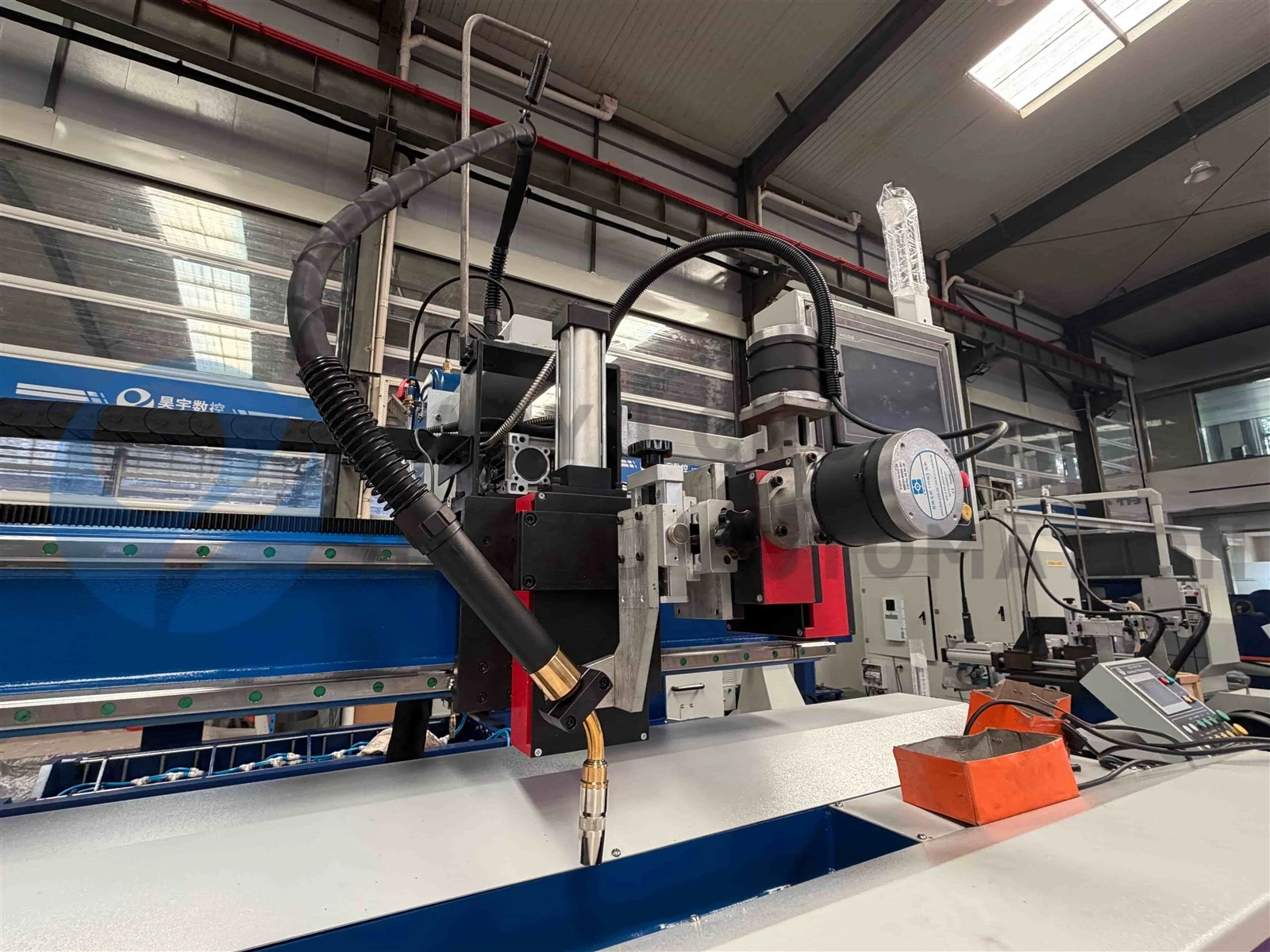
- Torch Adjustment
Used during setup to align the welding torch with the longitudinal joint.
- Welding Power Source
Selected according to the confirmed welding process.
- Control Interface
Used for machine operation and welding cycle settings.
- Fixture Arrangement
Designed according to the tank shape and loading method.
From Workpiece Evaluation to Welding Solution
Step 1 - Send Your Tank Drawing
Provide the gas tank dimensions, material and joint information.
Step 2 - Confirm the Longitudinal Seam
We evaluate the seam length, joint shape and welding position.
Step 3 - Determine the Welding Method
The welding process is selected according to the material, thickness and customer's welding requirements.
Step 4 - Design the Welding Station
The machine travel, workpiece support and fixture are configured around the actual gas tank.
Step 5 - Welding Trial
When sample workpieces are available, a welding trial can be used to verify the proposed process.
Step 6 - Final Machine Configuration
The final equipment configuration is confirmed based on the agreed technical requirements.
Who Is This Machine Suitable For?
The machine is mainly intended for manufacturers producing cylindrical welded gas tank shells and looking to automate the longitudinal seam welding stage.
It is particularly relevant when:
- the tank shell has a long axial joint;
- the same tank size is produced repeatedly;
- manual seam welding is difficult to keep consistent;
- welding travel needs to be controlled;
- the welding station must be adapted to a specific tank size.
FAQ
01.Is this machine for longitudinal or circumferential welding?
02.What gas tank information is required before machine design?
03.Can the machine be designed for different tank diameters?
04.How is the welding length determined?
05.Can you design the machine according to our existing tank drawing?
06.Can we send sample gas tank shells for welding tests?
Hot Tags: gas tank shell longitudinal seam welding machine, China, manufacturers, suppliers, factory
Send Inquiry
You Might Also Like