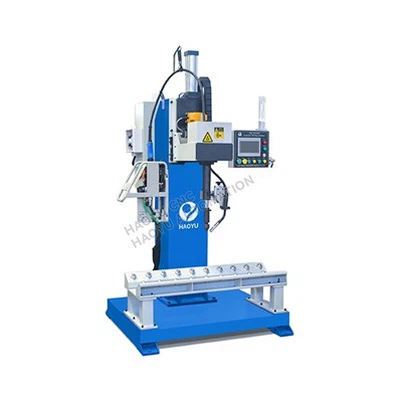


What Is GMAW Welding? Working Principle, Types & Applications
Leave a message
Gas Metal Arc Welding (GMAW), commonly known as MIG/MAG welding, is one of the most widely used and versatile fusion welding processes in modern manufacturing. Whether you are evaluating welding methods for an upcoming fabrication project, looking to optimize production efficiency, or selecting industrial welding equipment, understanding how GMAW works is crucial for making informed technical and financial decisions.In this comprehensive guide, we will break down the fundamentals of GMAW, its operating principles, metal transfer modes, advantages over other processes, and its primary industrial applications.
1. What is GMAW (Gas Metal Arc Welding)?
GMAW stands for Gas Metal Arc Welding. It is an electric arc welding process that joins two pieces of metal by heating them with an electric arc. The arc is struck between a continuously fed, consumable wire electrode and the base metal workpiece. An external shielding gas flows through the welding torch to protect the molten weld pool from atmospheric contamination (such as oxygen, nitrogen, and moisture in the air).
Is GMAW the Same as MIG/MAG Welding?
Yes. MIG (Metal Inert Gas) and MAG (Metal Active Gas) are specific sub-types of the broader GMAW process:
- MIG (Metal Inert Gas): Uses inert gases like 100% Argon or Argon/Helium mixtures. Ideal for non-ferrous metals like aluminum and copper.
- MAG (Metal Active Gas): Uses active gas mixtures (e.g., Argon mixed with $CO_2$ or Oxygen). Designed primarily for carbon steels and alloy steels.
2. How Does the GMAW Process Work?
The mechanics of GMAW can be summarized into four key components:
1.Continuous Wire Feed: A motor-driven mechanism feeds solid wire electrode through the torch at a preset Wire Feed Speed (WFS).
2.Arc Generation: A Constant Voltage (CV) power source supplies electricity to create a stable arc between the wire tip and the metal workpiece, melting both.
3.Gas Shielding Protection: A continuous stream of gas creates a protective curtain over the weld zone to prevent porosity and weld oxidation.
4.Joint Fusion: As the torch moves along the seam, the melted filler wire fuses with the base metal to form a strong, uniform joint upon cooling.

3.Key Advantages of GMAW for Your Projects
Choosing GMAW offers several operational and financial benefits for commercial fabrication and industrial manufacturing:
High Productivity & Speed: Continuous wire feeding eliminates the need to change electrodes frequently (unlike SMAW/Stick welding), resulting in higher deposition rates and faster project turnaround.
Clean & Low Spatter Output: Because shielding gas replaces solid flux, GMAW produces virtually no slag, drastically reducing post-weld cleaning and grinding costs.
Ease of Automation: GMAW seamlessly integrates with robotic systems and automatic wire feeders, making it ideal for high-volume mass production. Material Versatility: Capable of joining carbon steel, stainless steel, aluminum, nickel, and copper alloys.
4.GMAW vs. SMAW vs. GTAW: Quick Comparison
|
Feature |
GMAW (MIG/MAG) |
SMAW (Stick) |
GTAW (TIG) |
|
Electrode Type |
Continuous Wire (Consumable) |
Covered Rod (Consumable) |
Tungsten (Non-consumable) |
|
Shielding Method |
External Gas |
Flux Coating on Rod |
External Inert Gas |
|
Welding Speed |
Fast |
Slow to Medium |
Slow |
|
Slag Post-Cleaning |
Minimal to None |
Required (Chipping needed) |
None |
|
Outdoor Usability |
Poor (Drafts blow away gas) |
Excellent |
Poor (Draft sensitive) |
5.Primary Applications of GMAW
GMAW is trusted across major industries, including:
- Automotive Manufacturing: Chassis, frame, and body panel assembly.
- Construction & Structural Steel: Structural beam fabrication and heavy machinery build-outs.
- Shipbuilding & Pressure Vessels: Joining thick steel plates efficiently.
- Custom Sheet Metal Fabrication: Enclosures, ductwork, and custom equipment housings.
Ready to Upgrade Your Welding Capabilities?
Selecting the right GMAW setup-from wire feed units and torch configurations to shielding gas selection-is key to achieving consistent weld quality and maximum ROI.
[ Contact Our Welding Specialists Today ] to discuss your project requirements, request a equipment quote, or receive custom technical guidance.
6.Frequently Asked Questions (FAQ) About GMAW Shielding Gas Selection
Q1: Can I use 100% CO2 for GMAW welding on all metals?
A: No. While 100% $CO_2$ is a cost-effective option for carbon steel, it should never be used on aluminum or stainless steel. On stainless steel, $CO_2$ breaks down in the arc and causes carbon buildup (carburization), which severely degrades the corrosion resistance. On aluminum, $CO_2$ causes extreme oxidation and severe weld defects. Aluminum requires 100% inert gases like pure Argon or Argon/Helium blends.
Q2: What is the best gas mixture for general MIG welding on mild steel?
A: An 80/20 or 75/25 Argon/$CO_2$ mixture (often called C25) is widely considered the industry standard for general-purpose carbon steel welding. Argon stabilizes the electric arc and minimizes spatter, while $CO_2$ provides deep penetration and good joint fusion, resulting in clean, strong welds with minimal post-weld cleanup.
Q3: How does shielding gas flow rate affect GMAW weld quality?
A: Correct flow rate (typically 30–40 CFH or 14–20 L/min) is vital.
Too low: Drafts and air currents can easily blow the protective shield away, introducing oxygen and nitrogen that cause severe porosity, cracking, and weld weakness.
Too high: Excessive gas pressure creates turbulence, which draws atmospheric air directly into the weld pool, causing the exact contamination you are trying to prevent.
Q4: What is the difference between Inert Gas and Active Gas in GMAW?
A:
Inert Gases (MIG): Gases like Argon (Ar) and Helium (He) do not react chemically with the molten weld metal. They are essential for non-ferrous metals like aluminum, copper, and titanium.
Active Gases (MAG): Gases like Carbon Dioxide ($CO_2$) and Oxygen ($O_2$) react with the weld pool to alter arc stability, surface tension, and penetration profile. They are used for carbon steels and alloy steels.