
Customizable Robotic Welding Workbench
Leave a message
What is a robotic welding workstation?
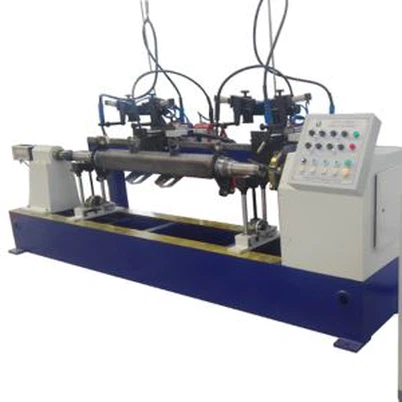
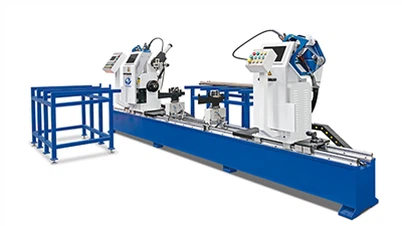
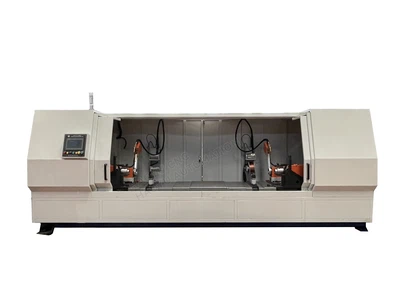
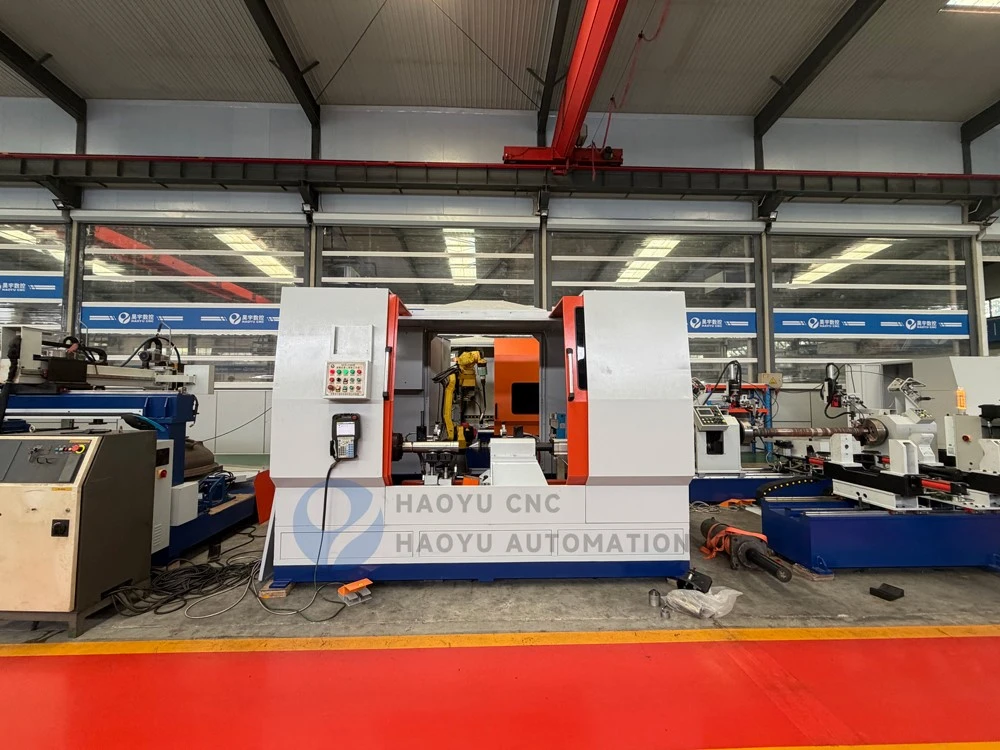
A robotic welding workstation is an automated welding production unit integrating industrial robots, welding equipment, control systems, tooling fixtures, and safety facilities. Its core objective is to replace traditional, manual welding with automated welding.
You can think of it as a "super welder" capable of autonomously completing welding tasks. It mainly consists of the following core components:
🤖 Core Components
A complete robotic welding workstation is like a closely coordinated team, with each part working collaboratively:
- Welding Robot Body: This is the workstation's "arm," typically a multi-jointed robotic arm responsible for precisely driving the welding torch along a predetermined trajectory.
- Welding Power Supply and Equipment: This is the "energy source," providing energy for welding, including the welding power supply and wire feeding mechanism.
- Positioner: This is the "flipping station," used to clamp and flip the workpiece, ensuring the robot always welds at the optimal angle.
- Tooling Fixtures: These are the "fixing assistants," used to quickly and accurately fix the workpiece to be welded, ensuring it does not shift during the welding process.
- Intelligent Control System: This is the "brain" of the workstation, responsible for receiving instructions, coordinating all equipment actions, and monitoring welding parameters.
- Teach Pendant and Programming System: This is the "human-machine interface," used for programming and debugging the robot. Operators use it to "teach" the robot how to work.
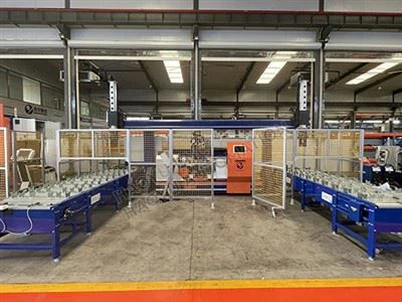
- Auxiliary and Safety Equipment: This includes an automatic torch cleaner (for cleaning welding torch spatter), safety railings, video surveillance, etc., ensuring the stable and safe operation of the workstation.
How the robotic welding machine station works?
The workstation's workflow can be summarized in three main steps: "programming - execution - monitoring."
1.Programming (Teaching): This is the first step. Through teaching (manual guidance to record the robot's path), the welding trajectory and parameters are "taught" to the robot.
2.Execution (Work): After startup, the control system directs the robot, positioner, fixtures, and other equipment to work together, automatically completing the entire process from positioning and clamping to welding.
3.Monitoring and Adjustment (Quality Assurance): The advanced workstation is equipped with vision sensors and a weld seam tracking system, which can monitor the welding process in real time and automatically correct trajectory deviations to ensure welding quality. (Optional)
Main applications of the robot welding machine
The robot welding machine based on welding angle, welds are categorized as follows:
1. Fillet welds (most common): Overlap welds on supports, T-joints, such as frames, bases, and brackets.
2. Circumferential welds: Circumferential welds on cylinder supports, pipes, and flanges; butt joints on cylinders; double-ended circumferential welds are often used in gas-shielded robotic welding.
3. Long straight welds: Assembly of boxes, beams, and door panels; robots have the greatest advantage in this area.
4. Overlap and plug welds: Sheet metal frames, with plates thicker than 1.5mm.
Based on the welding material, welds are categorized as follows:
1. Common carbon steel Q235, Q355 (most common): Frames, bases, supports, housings, engineering machinery parts; MAG/CO2 hybrid welding, good forming, high efficiency, most commonly used in robots.
2. Low alloy high-strength steel: Cylinder supports, engineering machinery structural parts, chassis parts.
3. Stainless steel (MIG): Stainless steel housings, storage tank supports; note that a mixed gas is required, resulting in more spatter and a less aesthetically pleasing finish compared to TIG welding.
4. Aluminum parts (pulse MIG): Aluminum alloy frames, aluminum housings; requires a pulse welding machine, ordinary gas shielded welding produces poor results on aluminum.
What Problems Can a Robotic Welding Workstation Solve?
Is Your Welding Production Facing These Challenges?
- Labor Shortage
Skilled welders are becoming increasingly difficult and expensive to recruit.
- Inconsistent Weld Quality
Different operators may produce different welding results on the same product.
- High Volume of Repetitive Welding
Operators spend hours performing the same welding movements every day.
- Increasing Production Orders
Your current welding team cannot easily keep up with increasing production demand.
- High Labor Costs
Adding production capacity often means hiring more skilled welders.
- Difficult Welding Positions
Some workpieces require precise torch positioning that is difficult to maintain manually.
A robotic welding workstation can help address these challenges by automating repetitive welding operations, improving welding consistency, increasing productivity, and reducing dependence on manual welding labor.
Conclusion
For manufacturers facing labor shortages, inconsistent manual welding, or increasing production demands, robotic welding automation offers a practical way to improve the efficiency and stability of welding operations.
The right robotic welding workstation can be configured according to the workpiece, welding process, production volume, and required level of automation. Instead of simply replacing manual welding, it helps manufacturers establish a more consistent, repeatable, and scalable production process.
If you are considering robotic welding automation for your production line, a customized welding workstation can be developed based on your workpiece and welding requirements.