

Hydraulic Cylinder Welding Process Explained
Leave a message
Hydraulic cylinders are widely used in construction machinery, agricultural equipment, mining machinery, industrial automation systems, and heavy-duty vehicles. As a critical power transmission component, the welding quality of hydraulic cylinders directly affects their strength, sealing performance, service life, and operational reliability.
With the development of intelligent manufacturing, traditional manual welding processes are gradually being replaced by automatic hydraulic cylinder welding machines and robotic welding systems. This article explains the complete hydraulic cylinder welding process, including preparation, welding methods, quality control, and the advantages of automated welding equipment.
What Is the Hydraulic Cylinder Welding Process?
The hydraulic cylinder welding process is a specialized manufacturing procedure used to join cylinder tubes, end caps, piston rod components, mounting parts, and other structural components through welding technology.
Main Steps of Hydraulic Cylinder Welding Process

1.Cylinder Positioning and Clamping
Accurate positioning is one of the most important steps in hydraulic cylinder welding.
A professional hydraulic cylinder welding machine is equipped with:
Hydraulic or pneumatic clamping systems
Automatic positioning devices
Rotating worktables
Servo-controlled movement systems
These functions ensure that the cylinder remains stable during welding and maintain consistent weld quality.
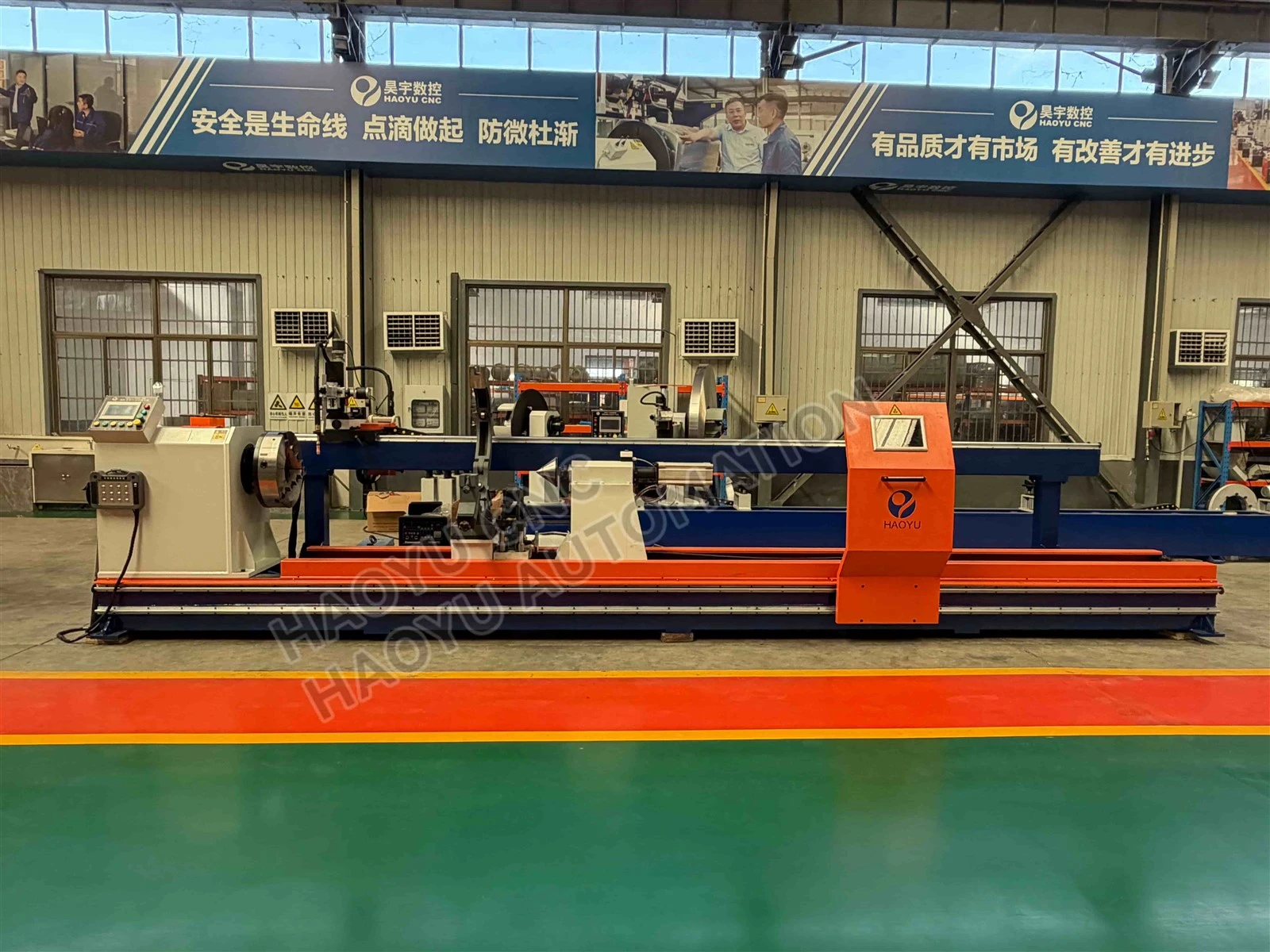
2.Hydraulic Cylinder Seam Welding
The most common welding operation for hydraulic cylinders is circumferential seam welding.
During the process:
- The cylinder is fixed on the welding machine
- The workpiece rotates at a controlled speed
- The welding torch moves along the welding joint
- A continuous and uniform weld bead is created
Common welding methods include:
MIG/MAG Welding
MIG/MAG welding is commonly used for carbon steel hydraulic cylinders due to its high efficiency.
Advantages:
- High welding speed
- Good production efficiency
- Suitable for mass production
Please check the following :
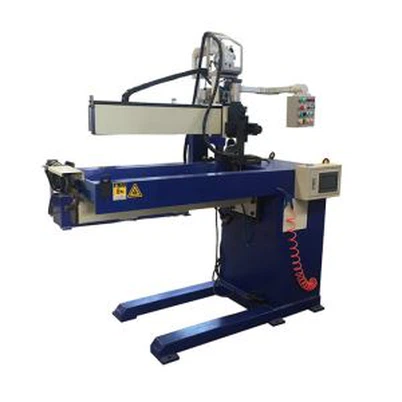
Hydraulic cylinder rings seam welding mahcine
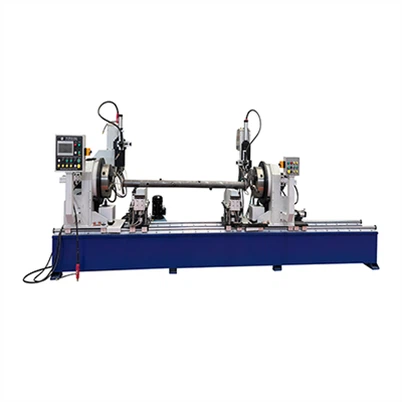
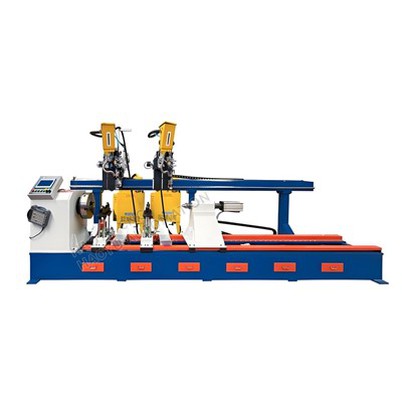
Hydraulic Cylinder Circumferential Welding Machine
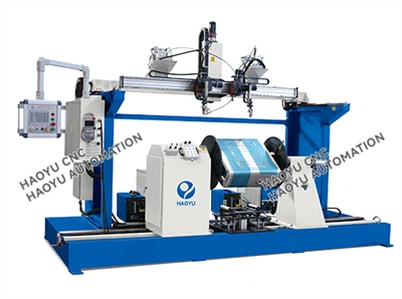
Tilting Hydraulic Cylinder Double-Ring Welding Machine
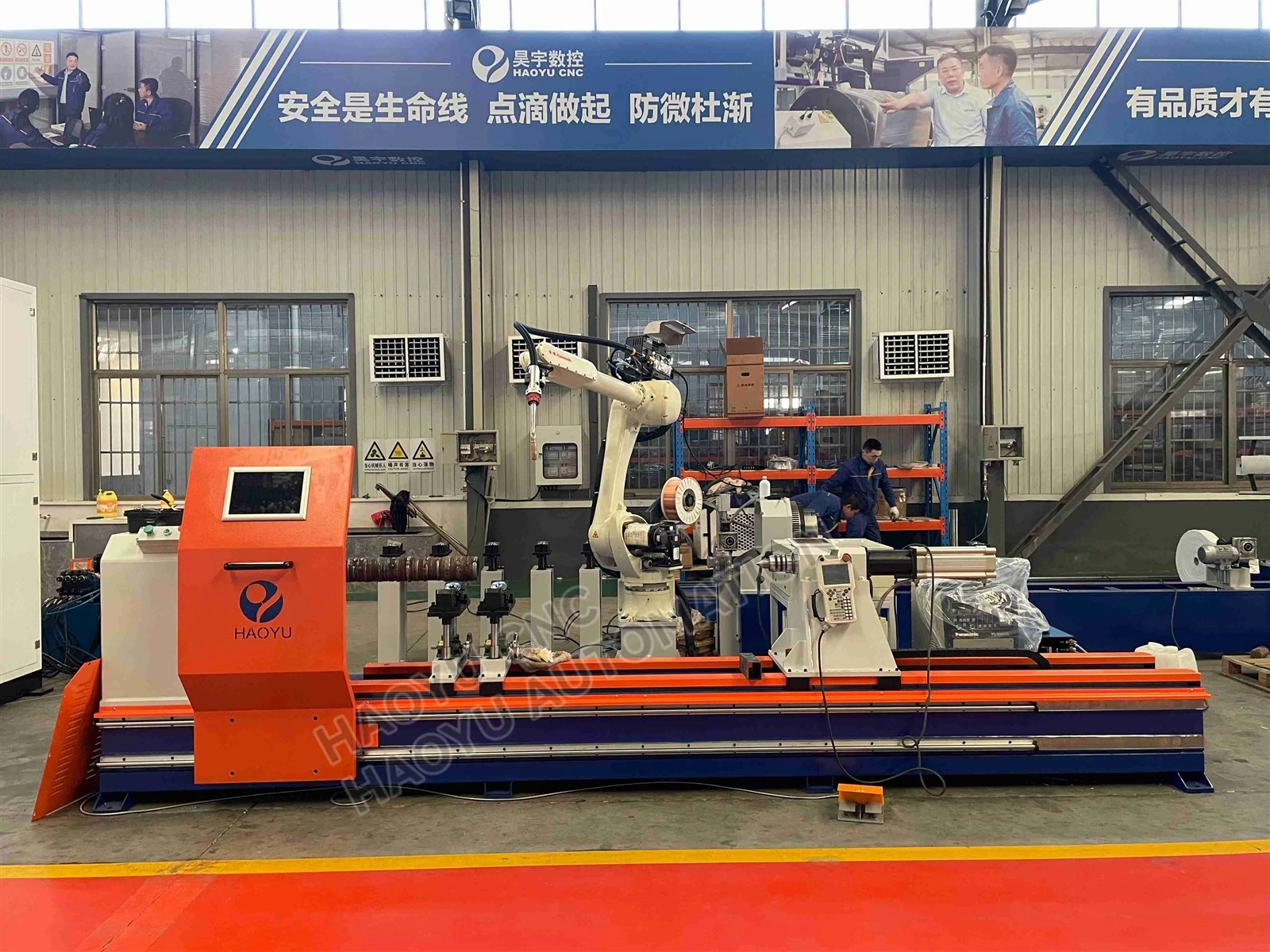
3.Robotic Hydraulic Cylinder Welding Process
With increasing demand for automation, many manufacturers are adopting robotic hydraulic cylinder welding systems.
A robotic welding system integrates:
- Industrial welding robots
- Automatic positioners
- Welding power sources
- PLC control systems
- Sensors and monitoring systems
Please check the following :
Dual-Station Robotic Welding Hydraulic Cylinder For Automated Welding System
Robot Welding Machine For Hydraulic Cylinder
Common Welding Defects in Hydraulic Cylinder Manufacturing
During hydraulic cylinder production, several welding problems may occur:
- Porosity
Caused by contamination, improper shielding gas, or incorrect welding parameters.
- Welding Cracks
Usually related to material properties, cooling speed, or excessive welding stress.
- Uneven Weld Beads
Often caused by unstable welding speed or incorrect torch movement.
- Insufficient Penetration
May reduce cylinder strength and cause leakage under high pressure.
Using an automatic hydraulic cylinder welding machine can effectively reduce these welding defects.
How to Improve Hydraulic Cylinder Welding Quality?
Manufacturers can improve welding quality through:
Precise Welding Parameter Control
Important parameters include:
- Welding current
- Welding voltage
- Rotation speed
- Wire feeding speed
- Shielding gas flow rate
Automatic Welding Equipment
Compared with manual welding, automatic welding systems provide:
- Stable welding performance
- Repeatable welding results
- Higher production efficiency
- Lower rejection rates
Real-Time Welding Monitoring
Advanced welding systems can monitor:
- Arc stability
- Welding position
- Welding defects
This ensures consistent production quality.
Advantages of Using Hydraulic Cylinder Welding Machine
A professional hydraulic cylinder welding machine provides significant advantages for manufacturers:
1. High Welding Accuracy
Servo-controlled systems ensure precise movement and stable welding paths.
2. Strong and Reliable Welds
Optimized welding parameters improve penetration and mechanical strength.
3. Increased Production Capacity
Automatic operation reduces production time compared with manual welding.
4. Better Product Appearance
Uniform weld seams improve the final appearance of hydraulic cylinders.
5. Suitable for Different Cylinder Sizes
Modern welding equipment can be customized according to:
Cylinder diameter
Cylinder length
Material type
Production requirements
Applications of Hydraulic Cylinder Welding Technology
Hydraulic cylinder welding technology is widely used in:
- Construction machinery
- Excavators
- Loaders
- Agricultural machinery
- Mining equipment
- Hydraulic presses
- Automotive equipment
- Industrial automation systems
Reliable welding processes help hydraulic cylinders achieve long service life in demanding working environments.
Conclusion
The hydraulic cylinder welding process plays a vital role in ensuring the strength, durability, and reliability of hydraulic cylinders. From component preparation and positioning to automatic seam welding and quality inspection, every step affects the final product performance.
By using advanced hydraulic cylinder welding machines and robotic welding technology, manufacturers can achieve higher efficiency, better welding consistency, and improved product quality.
For companies looking to upgrade their hydraulic cylinder production line, investing in automated welding equipment is an effective solution to improve manufacturing competitiveness.