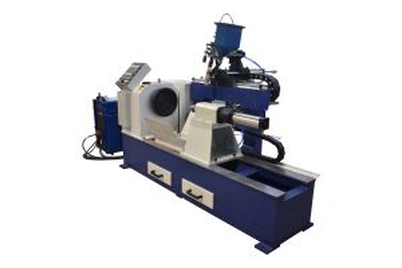




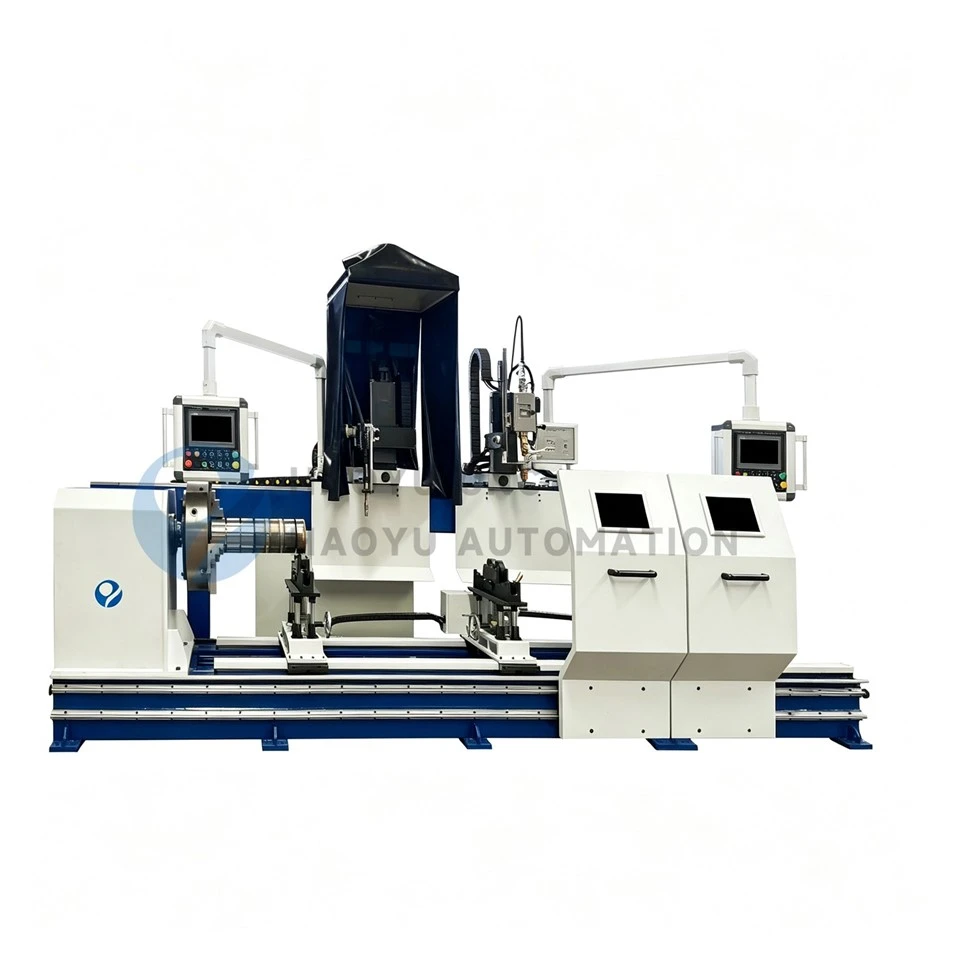
Automatic Narrow Gap Welding Machine
Automatic narrow gap MAG welding machine for heavy-wall hydraulic support cylinders. View specifications and request a customized welding solution.
Description
Narrow groove welding machine overview
The main characteristic of narrow-gap welding is that the bevel width is much smaller than that of conventional arc welding. For example, in the butt joint of 100mm thick plates, conventional arc welding typically uses a U-shaped or double Y-shaped bevel with a width of over 30mm, while the bevel width of narrow-gap welding is only 11-13mm, significantly reducing the weld cross-sectional area. Therefore, narrow-gap welding offers significant technical and economic advantages, including extremely high welding productivity, superior joint mechanical properties, lower residual stress and deformation, and lower welding production costs, making it a truly advanced manufacturing technology.

Applications of narrow gap welding equipment
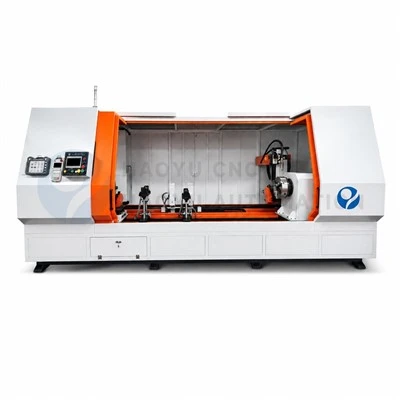
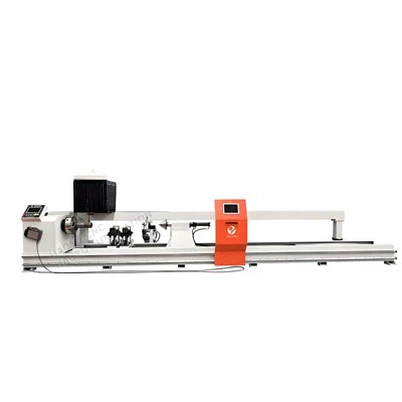
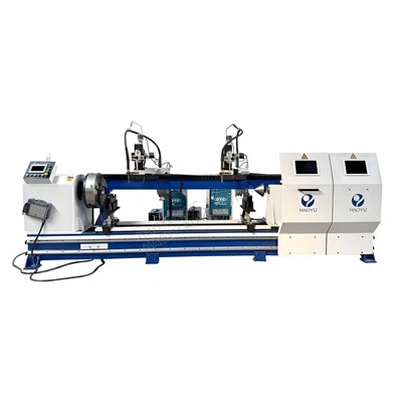
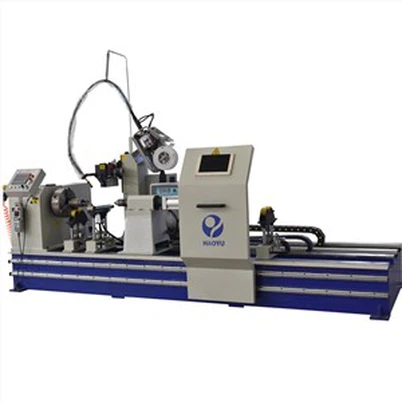
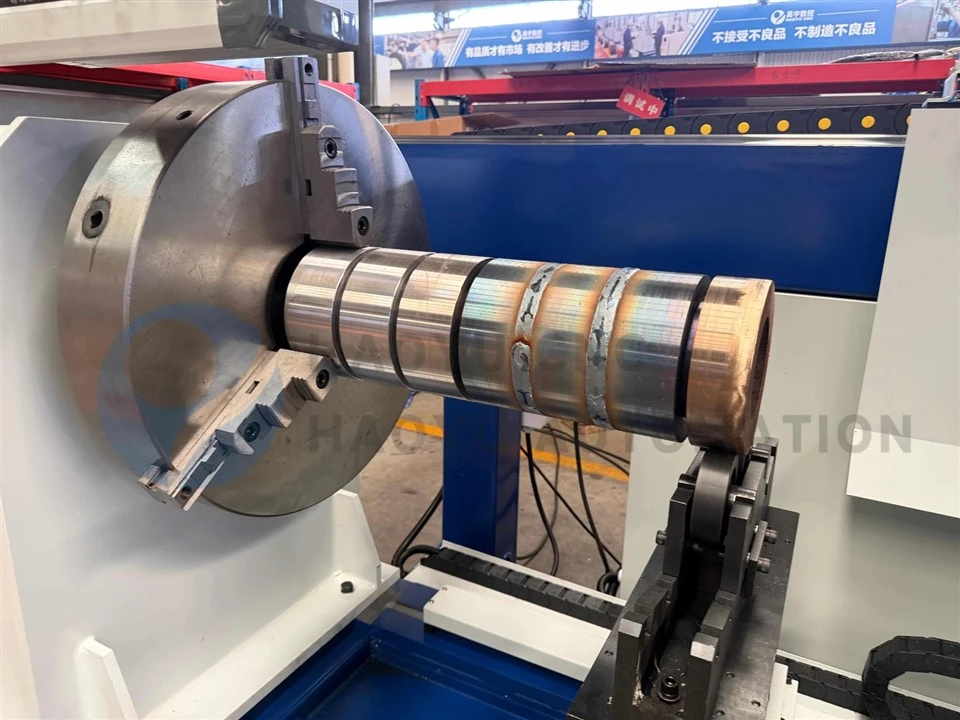
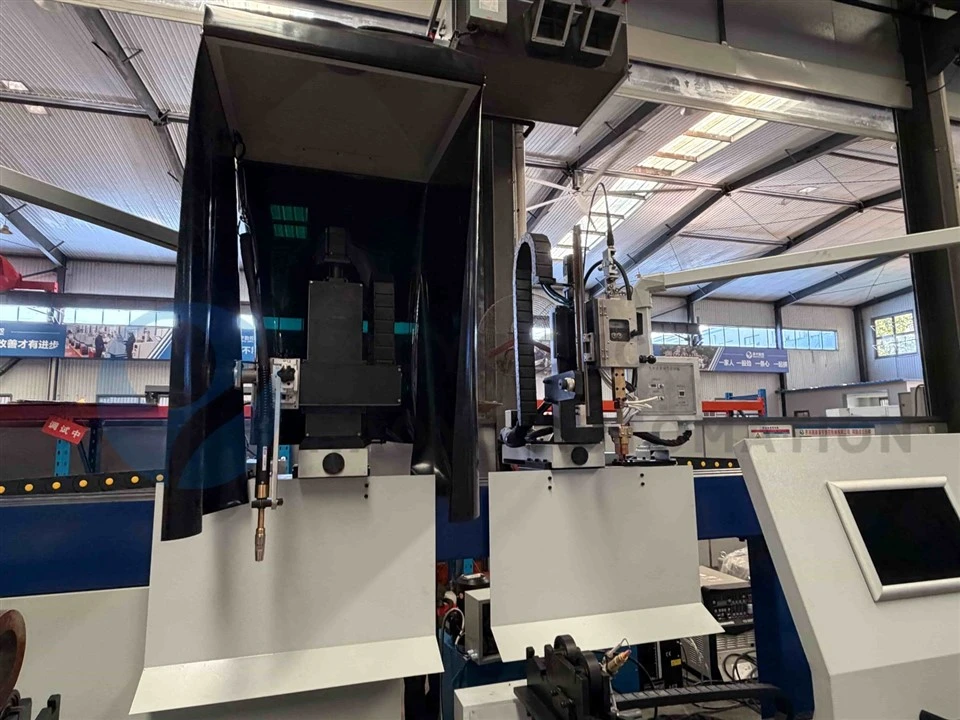
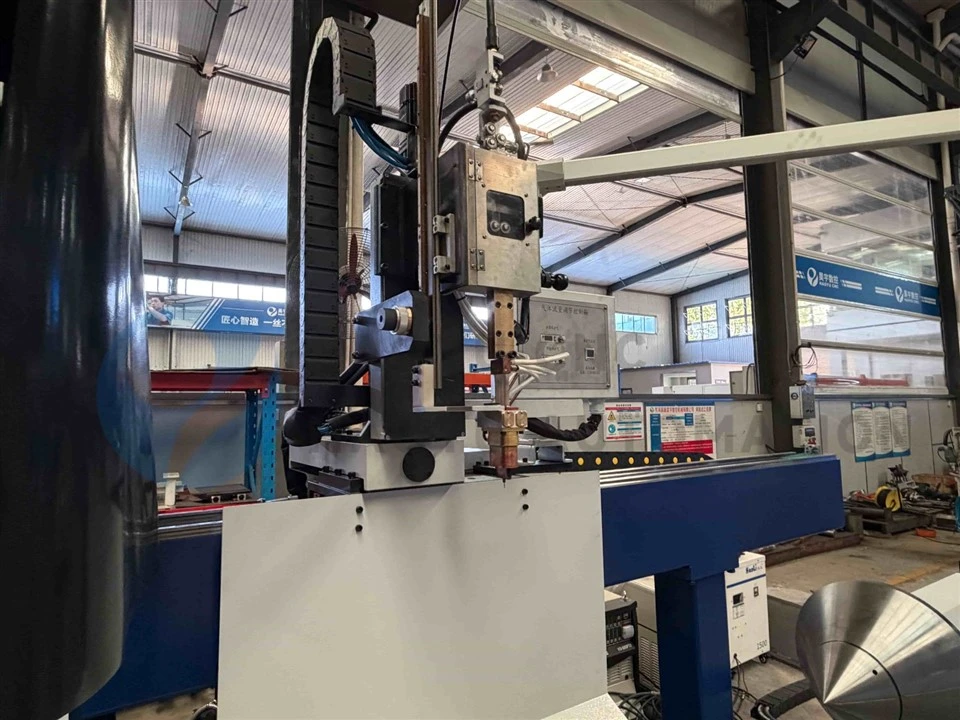
This equipment is mainly suitable for narrow-gap circumferential welding of hydraulic cylinders, including the inner cylinder, outer cylinder, and piston. To improve welding efficiency, this equipment is equipped with a narrow-gap welding system and a standard wide-gap welding torch oscillating welding system. It can use a narrow gap to weld the cylinder head, piston, inner cylinder body, and outer cylinder. It can also use a standard welding head to achieve large-size bevel welding and surfacing.


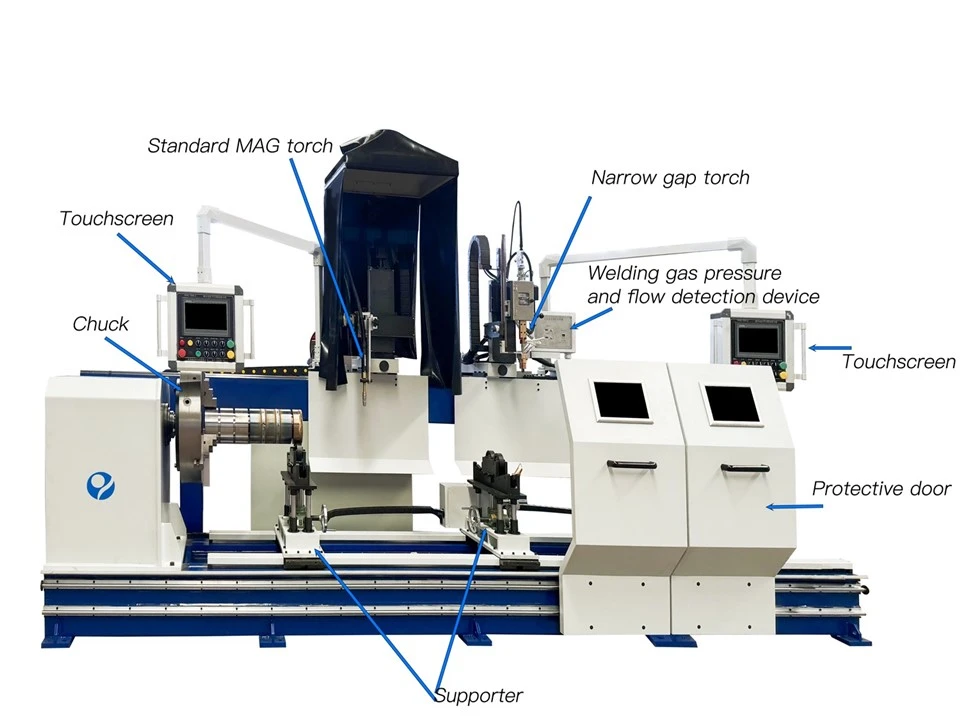
Equipment structure diagram display

Introduction to Welding Process
- Based on the workpiece structure and considering both welding quality and production efficiency, MAG welding was selected as the welding method. MAG welding not only offers high efficiency but also allows for relatively lower requirements on workpiece assembly, with a welding speed of approximately 350 mm/min.
- The MAG welding process is selected. This process, through the welding expert parameters built into the digital power supply, can achieve a stable pulse-by-pulse transition under any welding current conditions, thereby obtaining a uniform and aesthetically pleasing weld.
- Depending on the workpiece wall thickness, multiple welding passes are required. This specialized machine can perform multi-layer, multi-pass welding according to process requirements.
- Different welding parameters can be switched automatically, meaning that different levels of welding current, oscillation width, and welding torch lifting height can be programmed and controlled.
- The welding controller adopts a programmable PLC control system, which features stable control and a stable programming interface.
Technical parameters
| Driving method | Servo motor control |
| Applicable welding wire diameter | 1.2-1.6mm |
| Rotary bearing | 3000kg |
| Workpiece clamping method | 630 Three-claw chuck |
| workpiece diameter range |
Φ60~Φ630
|
| Tail seat tightens power | hydraulic clamping |
| Welding torch movement along the crossbeam | electric |
| Welding power input | 380V±10% 3-phase 50HZ |
What Problems Does This Narrow Gap Welding Machine Solve?
Manufacturers of hydraulic support cylinders often face long welding cycles, high filler-metal consumption, excessive heat input, and welding distortion when joining thick-wall components with conventional wide grooves.
This automatic narrow gap MAG welding machine is developed for the circumferential welding of hydraulic support outer cylinders, middle cylinders, and movable inner columns. The combination of a standard MAG torch and a dedicated narrow-gap welding torch helps solve the following production challenges.
1. Excessive Groove Volume
Conventional wide grooves require a large amount of weld metal, particularly on thick-wall hydraulic cylinder components.
The narrow-gap process uses a smaller groove width and a nearly parallel-sided joint, helping reduce the volume that must be filled.
2. High Filler-Metal Consumption
A larger groove requires more welding wire and shielding gas.
By reducing the groove volume, narrow-gap MAG welding can lower filler-metal and shielding-gas consumption. Actual savings depend on the wall thickness, groove design, and welding procedure.
3. Too Many Welding Passes
Thick-wall cylinders prepared with conventional grooves may require numerous welding layers and passes.
A properly designed narrow-gap joint reduces the weld cross-sectional area, helping shorten the multi-pass welding process and improve production efficiency.
4. Excessive Heat Input and Welding Distortion
Repeated welding passes can introduce considerable heat into the cylinder, resulting in deformation, dimensional variation, and additional correction work.
Reducing the weld volume and number of passes helps control total heat input and minimize welding distortion.
5. Conventional Torches Cannot Reach Deep Grooves
A standard MAG torch may be too wide to enter a deep and narrow groove, making it difficult to maintain the correct torch position and contact-tip-to-work distance.
The dedicated narrow-gap welding torch has a slim profile designed to access deep grooves and deliver the welding wire and shielding gas closer to the weld area.
6. Risk of Incomplete Sidewall Fusion
Sidewall fusion is one of the main challenges in narrow-gap welding. Poor torch positioning or unsuitable welding parameters may cause lack of fusion.
The dedicated narrow-gap torch, together with controlled torch positioning, oscillation, sidewall dwell time and welding parameters, helps direct the arc toward both groove sidewalls.
A qualified welding procedure and accurate joint preparation are still required to achieve reliable results.
7. Separate Equipment for Conventional and Narrow-Gap Welds
Some hydraulic cylinder components contain both conventional joints and deep narrow-gap joints.
This machine is equipped with one standard MAG torch and one dedicated narrow-gap torch, allowing the appropriate torch to be selected according to the joint type and welding stage. This reduces the need to transfer the workpiece between separate welding machines.
8. Inconsistent Manual Multi-Layer Welding
Manual control of workpiece rotation, torch position, welding speed and layer height can produce inconsistent weld formation.
The automated system can coordinate the welding parameters and workpiece rotation to improve repeatability between welding layers and different cylinder batches.
Hot Tags: automatic narrow gap welding machine, China, manufacturers, suppliers, factory
Send Inquiry
You Might Also Like