

How To Weld A Hydraulic Cylinder: A Welding Machine Manufacturing And Quality Guide
Leave a message
To weld a hydraulic cylinder during manufacturing, manufacturers select compatible materials, prepare the joints to an approved drawing, fixture the components accurately, and weld them using a suitable welding procedure. The welded assembly is then inspected, finished to the required dimensions, cleaned, assembled, and tested.
The objective is more than producing a continuous weld. Welding must create the required joint strength while preserving the cylinder's bore geometry, component alignment, and sealing performance.
This guide explains the main stages of hydraulic cylinder welding and the quality factors buyers should discuss with a manufacturer.
What Is a Welded Hydraulic Cylinder?
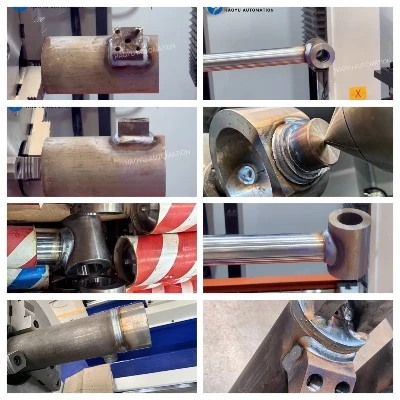
A welded hydraulic cylinder uses welded connections in its body construction. Depending on the design, these connections may join the barrel to the base cap, hydraulic port bosses, or mounting components.
The exact construction varies. Some designs use a removable threaded or bolted head to provide access for assembly and servicing, while the base cap is welded to the barrel.
Each welded connection has a specific function. A base-cap joint contributes to pressure containment and transfers operating forces. A mounting connection transfers loads between the cylinder and the machine. Port connections must provide a sound hydraulic connection without compromising adjacent features.
These different functions influence joint design, welding requirements, and inspection methods.
I.Select Materials Suitable for the Cylinder Design
Material selection comes before welding-process selection.
The barrel, base cap, port bosses, and mounting components must meet the design's strength and manufacturing requirements. They also need suitable welding compatibility.
Before production, the manufacturer should confirm:
- Material grades and their condition of supply.
- Barrel dimensions and wall thickness.
- Required mechanical properties.
- Compatibility between joined components.
- Material traceability requirements.
Using a stronger steel does not automatically produce a better cylinder. The design must consider weldability, fatigue loading, machining requirements, and the effects of welding heat.
Preheat and hydrogen-control requirements depend on material composition, thickness, restraint, and other welding variables. They should be established for the actual joint rather than copied from another product.
II.Design and Prepare the Weld Joints
preparation determines whether the welding process can consistently produce the required connection.
Depending on the cylinder design, preparation may include machining a locating feature, preparing a groove, or controlling the fit between the barrel and base cap.
The production drawing and welding procedure should define the relevant joint dimensions and weld requirements. A larger external weld is not a substitute for the specified penetration and joint quality.
Before welding, the manufacturer should verify:
- Joint geometry and component fit-up.
- Access for the welding torch or electrode.
- Cleanliness of the surfaces being joined.
- Removal of unsuitable coatings and contamination.
- Position of nearby threads, sealing surfaces, and machined features.
Good preparation supports repeatable welding and reduces avoidable variation between cylinders.
III.Fixture the Components and Check Alignment
The components must remain in the correct position throughout welding.
Fixtures may locate the barrel and base cap, control mounting orientation, and hold port bosses at the specified angle. For circumferential joints, suitable positioning equipment can help maintain consistent access around the assembly.
Important checks include:
- Base-cap position relative to the barrel.
- Mounting-eye or clevis orientation.
- Port location and clearance.
- Required overall dimensions.
- Fit-up consistency around the joint.
Tack welds also need to follow the applicable procedure. Poor positioning at this stage can produce a finished cylinder that does not fit the customer's equipment correctly.
IV.Choose the Welding Process for the Application
There is no single welding process that is best for every hydraulic cylinder.
Process selection depends on the materials, joint geometry, component size, production volume, and quality requirements.
| Welding approach | Factors to evaluate |
|---|---|
| GMAW, often called MIG/MAG | Productivity, shielding, access, and control of welding variables |
| GTAW, commonly called TIG | Heat control, joint access, and deposition-rate requirements |
| Mechanized or robotic welding | Repeatable fit-up, positioning accuracy, process monitoring, and production volume |
Automation can support consistency, but it still depends on controlled materials, joint preparation, fixtures, and welding parameters.
The welding procedure should define the filler metal, shielding requirements where applicable, operating parameters, temperature controls, and welding sequence. Procedure and welder qualifications should meet the applicable specification or customer requirements.
V.Control Heat Input and Welding Distortion
Heat control is particularly important because a hydraulic cylinder combines welded structures with precision-machined features.
Welding can change the shape of the barrel or affect the alignment of attached components. The manufacturing process must account for these changes.
The production plan should address:
- Heat input within the specified operating range.
- Preheat and interpass temperature requirements.
- Welding sequence and component positioning.
- Fixture restraint and weld shrinkage.
- Cooling requirements.
- Allowances for subsequent machining or honing.
Too little heat and excessive heat can create different problems. The goal is a controlled process that produces the required joint while maintaining the specified material properties and dimensions.
Minimum and maximum interpass temperatures may both be relevant, depending on the material and procedure.
VI.Plan Welding Around Precision Finishing
A hydraulic cylinder must meet dimensional requirements after welding, not simply before it.
The manufacturer should establish a production sequence that accounts for expected weld shrinkage and distortion. Where needed, final machining or honing follows welding to achieve the specified geometry and surface condition.
Checks may include:
- Barrel bore size, roundness, and straightness.
- Alignment of relevant locating features.
- Mounting dimensions.
- Port-thread and sealing-surface condition.
- Accessibility and cleanliness of internal passages.
Seals and other heat-sensitive internal components should be installed after welding and the necessary finishing and cleaning stages.
VII.Inspect the Welded Assembly
Weld appearance is one part of quality control. Inspection should determine whether the assembly meets the drawing, welding specification, and applicable acceptance criteria.
Visual inspection can identify surface conditions such as undercut, overlap, visible cracking, or an incorrect weld profile.
Additional nondestructive testing may be specified according to the joint and application. The method must suit the material, geometry, and defects being assessed; no single method detects every possible imperfection.
The inspection plan should define:
- Which joints require inspection.
- Which examination methods apply.
- When inspection takes place.
- Applicable acceptance criteria.
- Required records and traceability.
Dimensional inspection should accompany weld examination so that structural quality and manufacturing accuracy are both assessed.
VIII.Clean, Assemble, and Test the Finished Cylinder
After the welded body meets its requirements, the cylinder moves through final cleaning and assembly.
Internal contamination can affect hydraulic-system operation, so cleaning should address debris from welding, machining, and handling.
The assembled cylinder then undergoes the specified functional, leakage, and pressure tests. Test pressure, duration, and acceptance criteria must follow the approved product requirements.
A pressure test confirms performance under the stated test conditions. It does not replace material verification, welding-process control, or dimensional inspection.
About Us
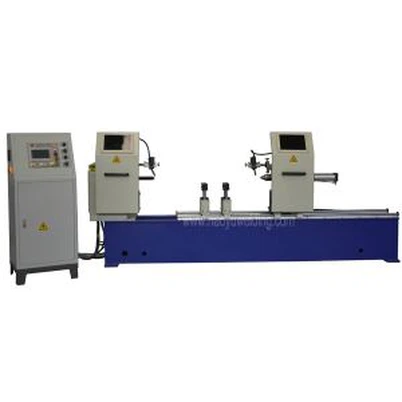
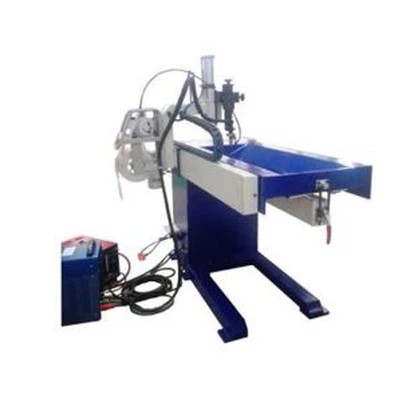
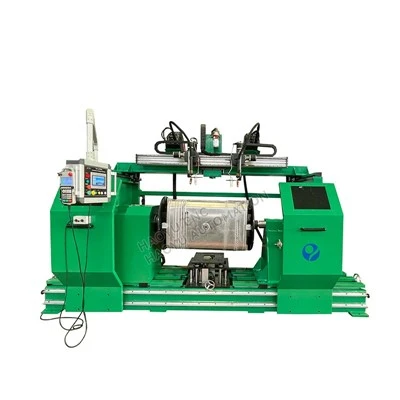
We are a manufacturer and trader of hydraulic cylinder welding equipment. We can customize non-standard welding equipment to meet your specific welding needs for hydraulic cylinder components. Please see our welding machine product introduction below: Hydraulic cylinder welding machine , please dont hesitate contact us for a welding solution,we will help you solve the welding requirements or problem you have met.