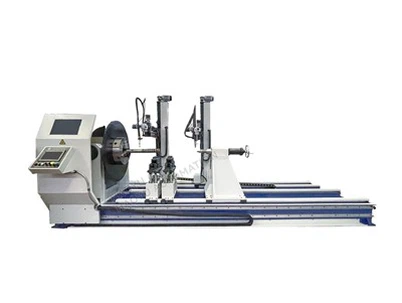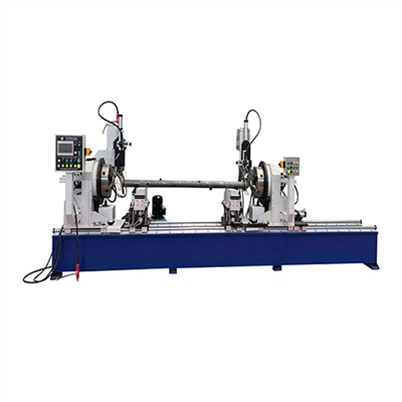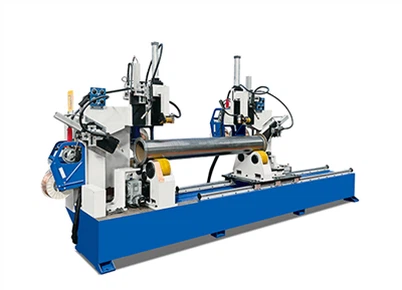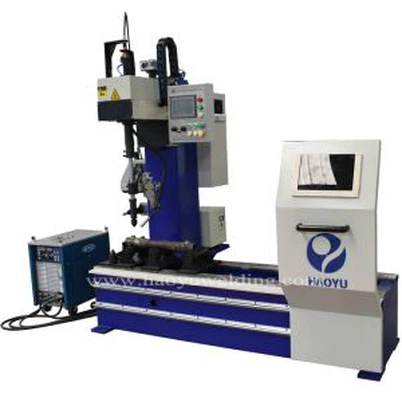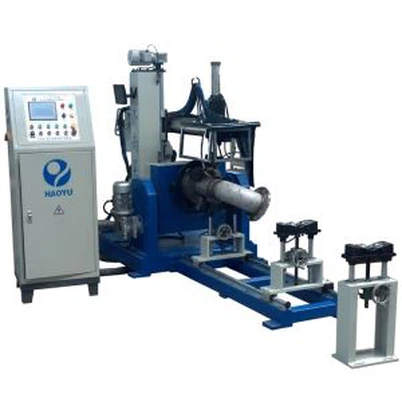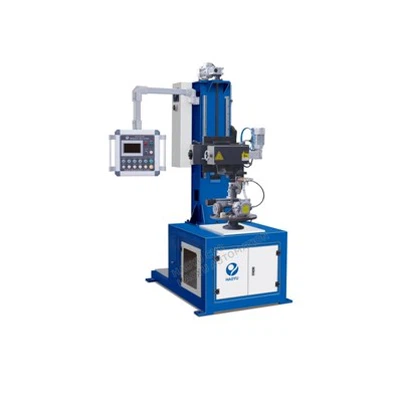



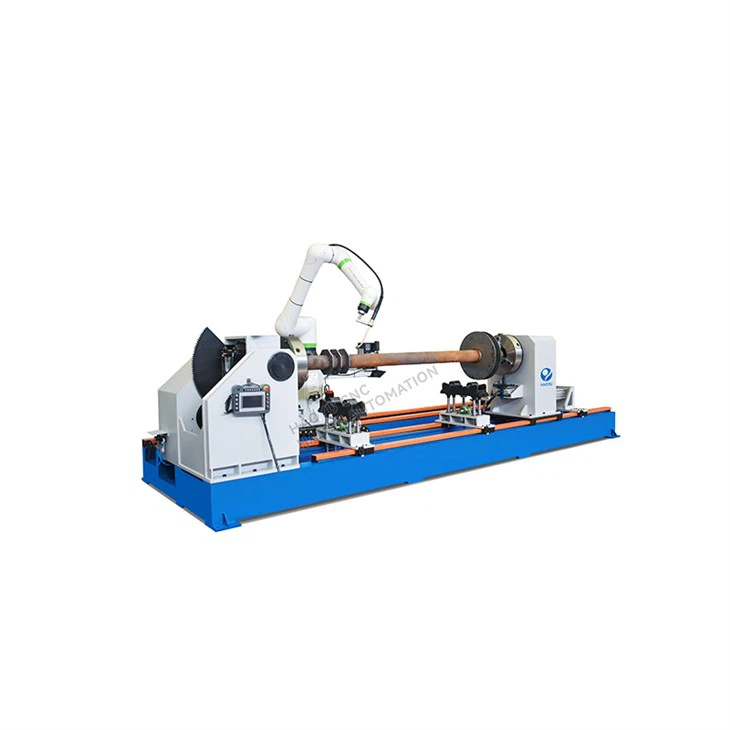
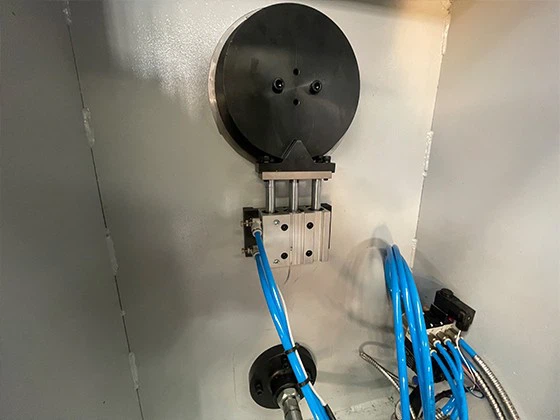

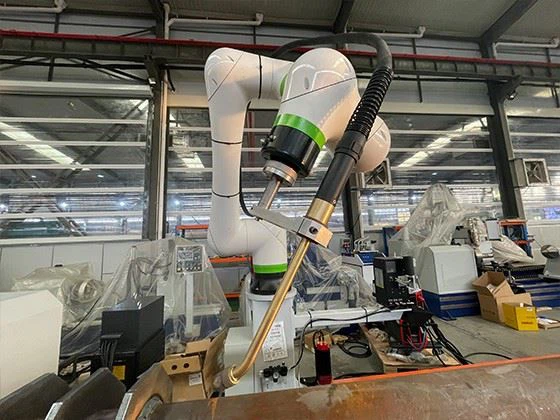

Automatic MAG Robotic Pipe Flange Welding Machine
This equipment typically consists of an industrial robot, a high-precision positioner, a dedicated welding power source, and an integrated control system. It can automatically load, center, and weld flanges, significantly improving welding efficiency and consistency.
Description

Automatic MAG Robotic Pipe Flange Welding Machine Description
The Automatic MAG Robotic Pipe Flange Welding Machine is designed for automated welding of pipe and flange assemblies, particularly circumferential joints where a pipe is connected to a flange. It combines robotic welding technology with a workpiece positioning system and dedicated fixtures to support repeatable welding operations in industrial pipe fabrication.
For manufacturers handling recurring pipe flange orders, manual welding can require considerable operator skill, repeated torch adjustments and close attention to weld consistency. A robotic welding system helps standardize the welding process, reduce repetitive manual torch operation and improve production repeatability when the workpiece, fixture and welding procedure are properly configured.
The machine can be configured according to the pipe diameter, flange dimensions, workpiece length, material, joint design and production requirements. The actual robot configuration, positioner, welding power source and automation functions can be confirmed during technical evaluation.
How Does the Robotic Pipe Flange Welding Machine Work?
The following is a typical workflow. The actual sequence depends on the machine configuration.
Step 1: Load the pipe flange assembly
The operator places the assembled pipe and flange into the designated fixture. The parts should be prepared and tack-welded as required by the agreed welding procedure.
Step 2: Position and secure the workpiece
The fixture locates the pipe flange assembly and holds it in the required position. Proper alignment and clamping help maintain the joint position during welding.
Step 3: Select the welding program
The operator selects the appropriate program for the workpiece model. The program and fixture must correspond to the actual pipe dimensions, joint geometry and approved welding procedure.
Step 4: Perform MAG robotic welding
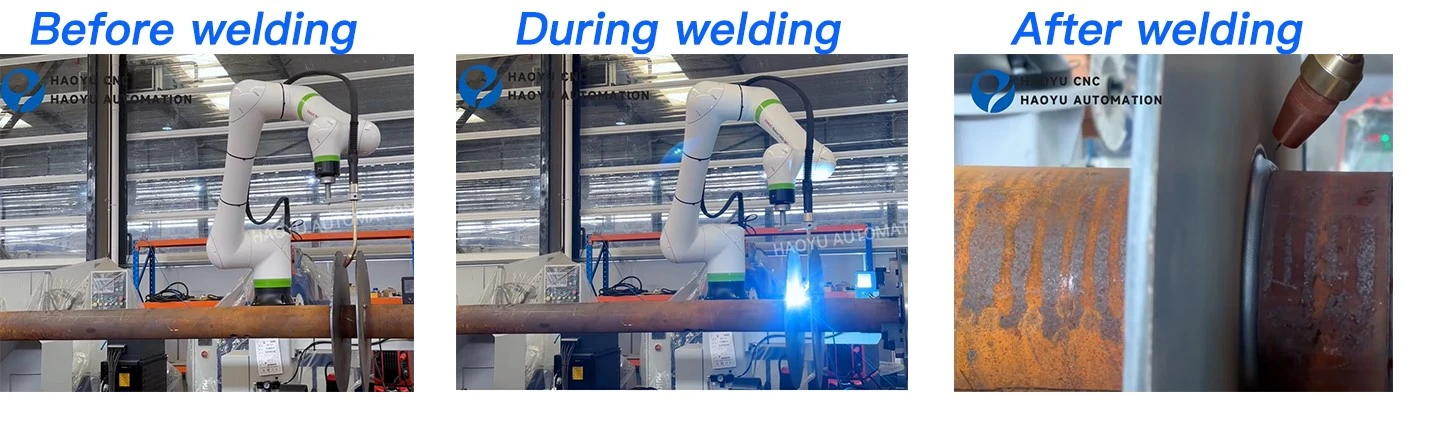
The robot moves the welding torch along the programmed path while the workpiece positioner operates according to the configured welding sequence. MAG welding parameters are set according to the material, thickness, joint design and welding procedure.
Step 5: Inspect and unload the finished assembly
After welding is completed, the workpiece is removed for the required visual inspection and any specified dimensional or nondestructive testing.
You can watch this vedio help you understand the MAG Robotic Pipe Flange Welding Machine in Operation:
Key Features of the MAG Robotic Welding System
- Robotic welding control
The industrial robot follows a programmed welding path to support repeatable torch movement for pipe flange joints. Robot reach, payload and available axes should be selected according to the actual workpiece and fixture arrangement.
- Dedicated pipe flange fixtures
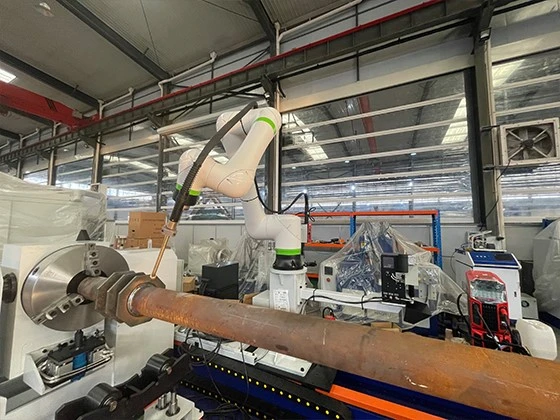
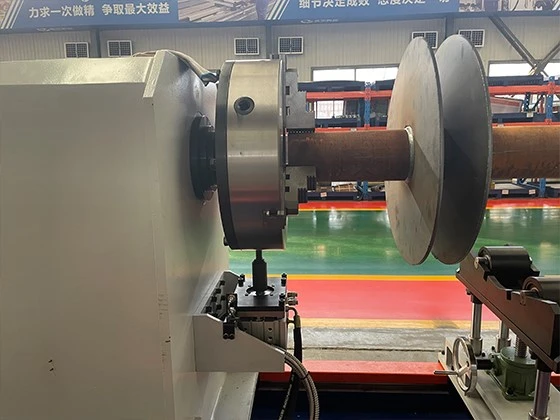
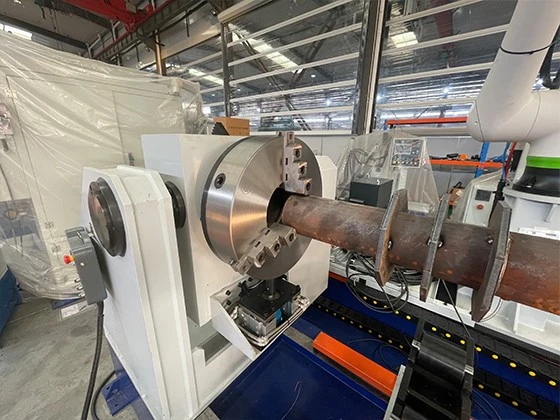
Workholding fixtures are selected or designed around the pipe and flange dimensions. Suitable positioning helps maintain joint alignment and provides the robot with a consistent welding reference.
- MAG welding process
Metal Active Gas (MAG) welding is used for suitable applications based on the base material, joint preparation and required weld properties. The welding power source, wire, shielding gas and welding procedure must be selected for the actual application.

- Programmable production setup
For recurring product models, appropriate robot programs and welding parameters can be established and validated. The number of supported programs and the method of changing between models depend on the control configuration.
- Customized automation options
Depending on the production requirements, the workstation may be configured with dedicated clamping mechanisms, additional positioning functions or loading and unloading assistance. These options should be confirmed in the technical proposal.
Applicable Workpieces and Industries
The machine is intended for manufacturers that need to weld pipe and flange assemblies using a robotic MAG welding process.
Typical workpieces may include:
- Carbon steel pipe flange assemblies
- Industrial piping components with circumferential flange joints
- Pipe sections prepared for flange connection
- Repeated pipe flange assemblies manufactured to defined dimensions
- Other compatible circular joints, subject to fixture design and welding trials
Potential application industries include:
- Industrial pipe fabrication
- Pressure vessel component manufacturing
- Process piping equipment manufacturing
- Industrial fluid handling equipment
- Other manufacturing operations involving compatible pipe flange assemblies
Suitability depends on the material, pipe diameter, wall thickness, flange geometry, joint preparation and applicable welding requirements. For pressure-retaining components, the welding procedure and inspection requirements should be agreed upon before production.

What Problems Can This Machine Help You Solve?
1. Reduce repetitive manual welding operations
Pipe flange assemblies often require circumferential welding around the joint. A programmed robot can follow a defined welding path, reducing the need for an operator to manually guide the welding torch throughout each weld.
2. Improve weld consistency across repeated workpieces
Consistent torch positioning, travel speed and welding parameters are important for repeat production. A properly configured robotic system helps reproduce an established welding procedure across similar pipe flange assemblies.
3. Simplify production of recurring flange models
Dedicated fixtures and stored welding programs can help operators switch between supported workpiece models more efficiently. The available changeover functions depend on the control system and the range of products to be manufactured.
4. Reduce dependence on manual welding skills
Once the welding procedure has been developed and validated, operators can run the configured program instead of manually controlling every part of the welding movement. Proper setup, supervision and welding quality inspection are still required.
5. Support a more organized production workflow
Integrating the robot, workpiece positioner and fixtures into one workstation can help standardize loading, positioning, welding and unloading. Additional loading or unloading automation can be considered if required.
How to Select the Right Robotic Pipe Flange Welding Machine
Before selecting a system, buyers should evaluate the following factors.
1. Pipe diameter and flange dimensions
Provide the minimum and maximum pipe diameters, flange outer diameter, flange thickness and overall workpiece length. These dimensions determine fixture design, robot reach and positioner requirements.
2. Material and wall thickness
Confirm whether the workpieces are carbon steel, stainless steel or another material, together with their thickness ranges. These details influence the MAG welding procedure and power source selection.
3. Weld joint design
Clarify the joint location, weld type, access direction, required weld size and whether single-pass or multipass welding is necessary. Drawings and photographs of the actual workpiece are especially useful.
4. Production volume and cycle time
Share the target output per shift, the number of workpiece models and the expected changeover frequency. These details help determine whether a single-station arrangement or additional automation is appropriate.
5. Required welding quality and inspection
Specify the applicable welding standard, acceptance criteria and inspection method. The proposed system should be evaluated against the actual quality requirements rather than an assumed universal welding accuracy.
Customized Welding Solutions for Your Production Needs
Every pipe flange welding application has its own dimensional and process requirements. A suitable robotic workstation should be designed around the workpiece rather than selected by robot specifications alone.
To evaluate a suitable configuration, please provide:
Pipe diameter and wall thickness range
Flange dimensions and workpiece drawings
Base material and required weld joint
Expected production volume and cycle time
Welding quality standards and inspection requirements
Existing factory layout and automation requirements, if applicable
Based on this information, the equipment configuration, fixtures, workpiece positioning method and welding process can be evaluated for your application. Welding trials using representative workpieces can help verify process feasibility before finalizing the technical solution.
FAQ
FAQ FOR ROBOTIC WELDING MACHINE FOR TUBE FLANGE

01.What is a MAG robotic pipe flange welding machine used for?
02.Can the machine weld different pipe diameters and flange sizes?
03.Is MAG welding suitable for carbon steel pipe flanges?
04.Can the machine improve welding consistency compared with manual welding?
05.Can the equipment be customized for our pipe flange products?
06.What information is needed to obtain a quotation?
Our Package for products
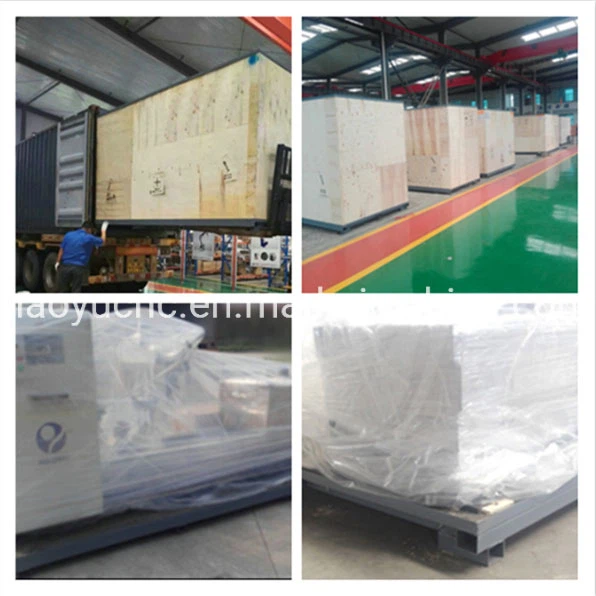
1.Normally we will use fumigation plywood case for packaging; for some big machine, we can use steel pallet and plastic filme cover.All machines are paint with anti rust paint or oil before leaving factory.
2.Package can be as customers' requirement.
Sales term
- Payment term: 30% T/T advance along with the purchase order, balance should be cleared before delivery
- Delivery time: 45 days on receipt of payment in advance
- Guarantee: 12 months for the whole machine
Hot Tags: automatic mag robotic pipe flange welding machine, China, manufacturers, suppliers, factory
Send Inquiry
You Might Also Like